Petrochemical Intermediates
Commodity chemicals made largely from petroleum and natural-gas feedstocks, used in resins, polyester, gas treating, detergents and solvents.
Showing 1–10 of 10 products
Methanol
Methanol (methyl alcohol, CAS 67-56-1), 99% minimum, packed in 160 kg drums or ISO tanks for formaldehyde, acetic acid and MTBE producers and for process solvent users. It is toxic by all routes of exposure and its flame is almost invisible in daylight.

Methyl tert-Butyl Ether (MTBE)
High-purity methyl tert-butyl ether (MTBE, CAS 1634-04-4) at 99.0 wt% minimum with methanol max 0.05 wt%, for pharmaceutical extraction, cracking to high-purity isobutylene and gasoline octane blending. Supplied in 150 kg drums or ISO tanks.
MPG - Mono Propylene Glycol
Mono propylene glycol (MPG, propane-1,2-diol; CAS 57-55-6, EINECS 200-338-0) in industrial and USP/EP grades at typically 99.5% min assay. Its low toxicity makes it the glycol chosen over MEG wherever food, drinking water, people or animals may be exposed.

DPG - Dipropylene Glycol
Dipropylene glycol (DPG; CAS 25265-71-8, EINECS 246-770-3), an isomer mixture at typically 99.5% min purity, in industrial and low-odour fragrance grades: the standard perfume diluent and a diol for unsaturated polyester and alkyd resins.
DEG - Diethylene Glycol
Diethylene glycol (DEG, CAS 111-46-6) for industrial use: a hygroscopic solvent, natural gas dehydration glycol and polyol for polyester and polyurethane. Acutely toxic to the kidneys, it must be kept well apart from glycerine and propylene glycol.
MEG - Mono Ethylene Glycol
Mono ethylene glycol (MEG, CAS 107-21-1) goes mostly into polyester, as the diol that reacts with terephthalic acid to make PET fibre, film and bottles. Fibre grade is typically 99.9% minimum purity; industrial grade serves antifreeze and heat-transfer fluids.
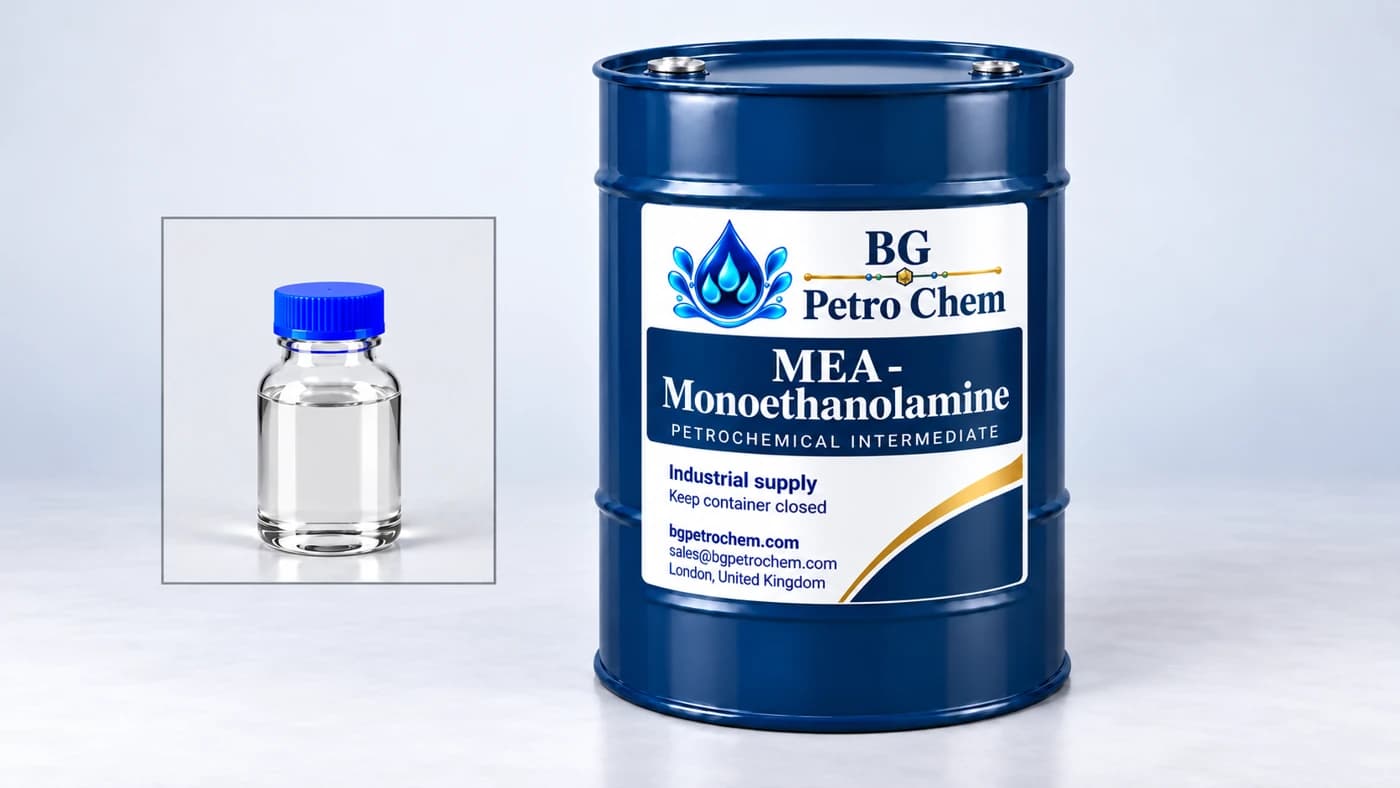
MEA - Monoethanolamine
Monoethanolamine (MEA, CAS 141-43-5) is the reference amine for acid gas removal and post-combustion CO2 capture. It binds carbon dioxide chemically, so it keeps absorbing at the low partial pressures of flue gas, where physical solvents take up too little.

DEA - Diethanolamine
Diethanolamine (DEA, CAS 111-42-2) is a secondary amine for acid gas removal, with lower solvent losses than MEA, and a feedstock for diethanolamide surfactants. Its use in cosmetics is now restricted because secondary amines can form nitrosamines.

Isopropanol (IPA)
Isopropanol (IPA, CAS 67-63-0) at 99.9% minimum purity: a fast, clean-evaporating solvent for electronics and precision cleaning and for pharmaceutical, coating and ink processes, and the base that sanitiser makers dilute to about 70%. In 160 kg drums or ISO tanks.

Linear Alkylbenzene Sulfonic Acid (LABSA)
LABSA (CAS 27176-87-0) is the dark brown, viscous acid form of linear alkylbenzene sulfonate, supplied at 96% minimum active matter. Once neutralised by the formulator it becomes the main anionic surfactant in laundry powders and dishwash liquids. 215 kg drums or IBCs.