Chemical & Pharmaceutical Processing
Chemical, pharmaceutical, gas-processing and detergent plants buy aromatics, alcohols, glycols, amines and pure hydrocarbons as feedstocks. Here purity, trace impurities and the documents that prove them matter most.
Application requirements
Nitration-grade benzene is the feedstock for ethylbenzene and styrene, cumene for phenol and acetone, cyclohexane, nitrobenzene and aniline, and linear alkylbenzene. Toluene and xylenes feed nitration and other derivative chemistry, methanol is the feedstock for formaldehyde, acetic acid and methylamines, and cyclohexane is oxidised to the KA oil that becomes nylon. MTBE is a peroxide-resistant extraction solvent and a source of high-purity isobutylene. n-Hexane extracts oilseeds and botanicals, n-heptane is the lower-toxicity choice for pharmaceutical crystallisation, and isooctane and petroleum ether serve analytical methods such as fat determination and peroxide value. MEG is the diol in PET and polyester fibre and an engine coolant base, MPG is used in unsaturated polyester resins and, in pharmacopoeia grade, as an excipient, and DEG dehydrates natural gas. MEA and DEA absorb carbon dioxide and hydrogen sulphide in gas treating and carbon capture. LABSA is neutralised to make the main surfactant in laundry powders and dishwash liquids. Refinery sulphur is burned to make sulphuric acid, and white mineral oil serves pharmaceutical and cosmetic uses in pharmacopoeia grades.
Specification checkpoints
Agree purity by gas chromatography and the impurities that matter to your process, such as benzene in hexane, toluene in methylcyclohexane, water by Karl Fischer, sulphur, colour, distillation range, acidity and non-volatile residue. Decide the grade you need: technical grades suit most chemical duty, while pharmacopoeia and food grades carry tighter limits and extra documents. For pharmaceutical use, ICH Q3C places benzene in Class 1, to be avoided, n-hexane, methanol, toluene, xylene, cyclohexane and methylcyclohexane in Class 2 with concentration limits, and n-heptane, isopropanol and MTBE in Class 3. For ethanolamines, agree assay, water and the content of other amines; for LABSA, active matter, free oil and free sulphuric acid; and for sulphur, purity, ash, acidity, moisture, carbon and arsenic.
Grade selection
Pharmaceutical and botanical extraction often uses n-heptane or isohexane in place of n-hexane, while oilseed crushers use hexane grades of lower n-hexane content. Gas plants choose MEA for low-pressure carbon dioxide removal and DEA for refinery gas treating, and polyester and resin plants use MEG or MPG. Detergent plants neutralise LABSA in their own slurry or liquid lines.
Handling and documentation
Benzene is a known human carcinogen with very low workplace exposure limits, so handle it only in closed systems; REACH Annex XVII also restricts it in mixtures placed on the market. Methanol is toxic by every route and burns with an almost invisible flame. DEG is acutely toxic to the kidneys and must never stand in for glycerine or propylene glycol in medicines or food. Ethanolamines and LABSA are corrosive. Most of the solvents and alcohols here are flammable liquids carried as dangerous goods, so plan UN classification, packaging and carrier acceptance before shipment. Request the specification, safety data sheet and a certificate of analysis for the supplied batch before you qualify a new source.
Products for Chemical & Pharmaceutical Processing
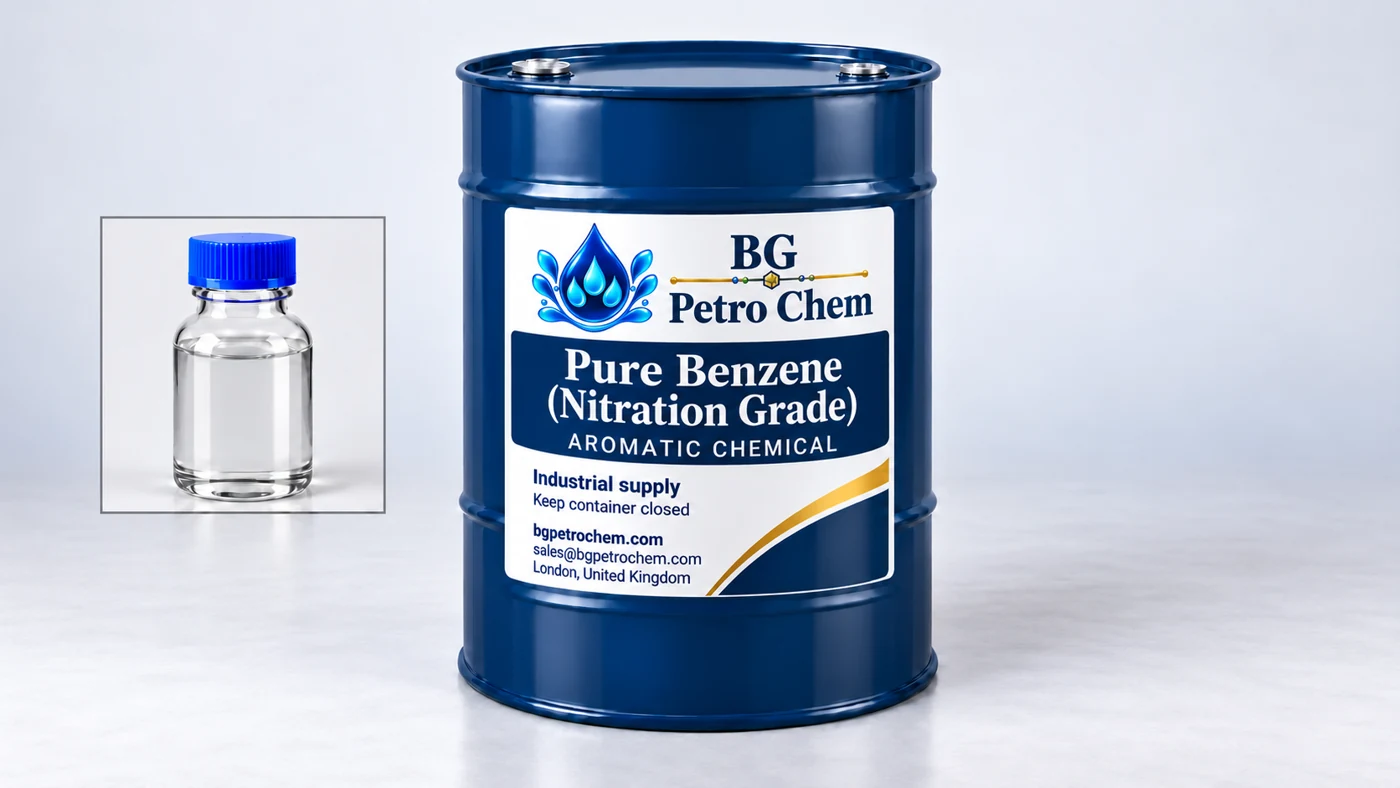
Pure Benzene (Nitration Grade)
A reformate-derived benzene for chemical conversion: solidification point min 4.85 °C on an anhydrous basis, boiling within 1°C including 80.1°C and acid wash colour max 2, suited to ethylbenzene/styrene, cumene, cyclohexane, nitrobenzene and LAB plants.
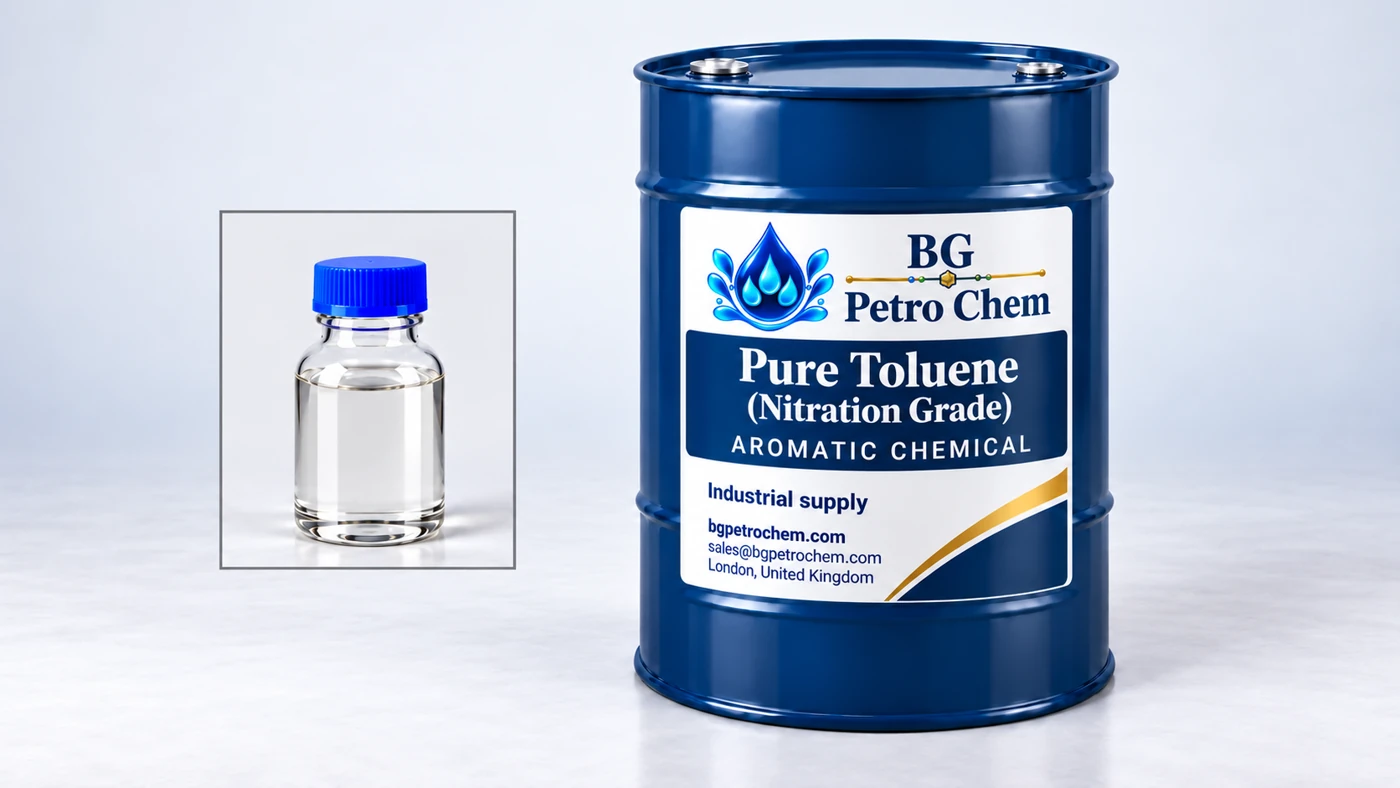
Pure Toluene (Nitration Grade)
Nitration grade toluene from refinery reformate, with non-aromatic hydrocarbons capped at max 1.5 vol % and a distillation range within 1°C (including 110.6°C), serving paint and ink thinners, contact adhesives and DNT/TDI production.
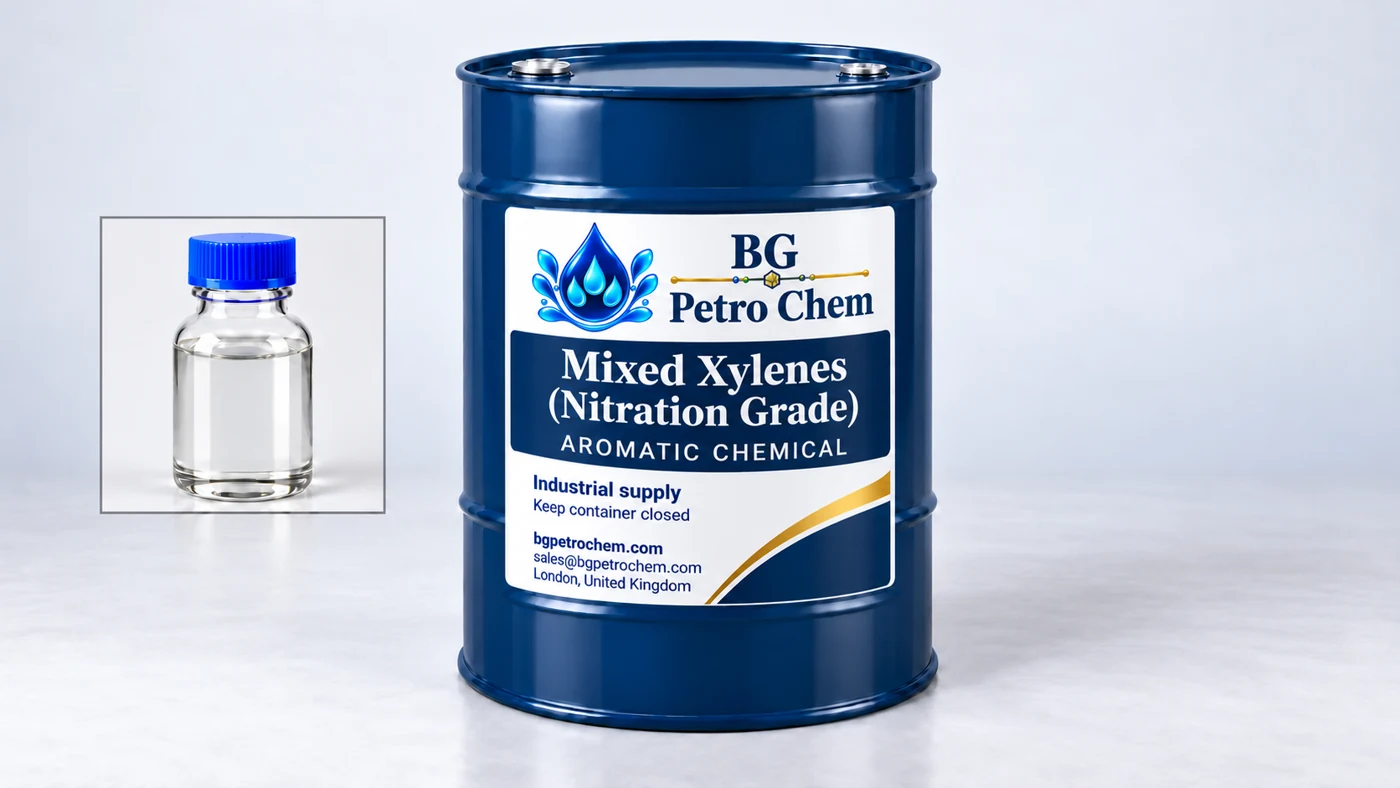
Mixed Xylenes (Nitration Grade)
A blend of the three xylene isomers plus ethylbenzene, cut from reformate with an initial boiling point of min 137 °C, a dry point of max 143 °C and max 4.0 vol % non-aromatics: the slower-evaporating aromatic solvent for coatings, resins and EC pesticides.
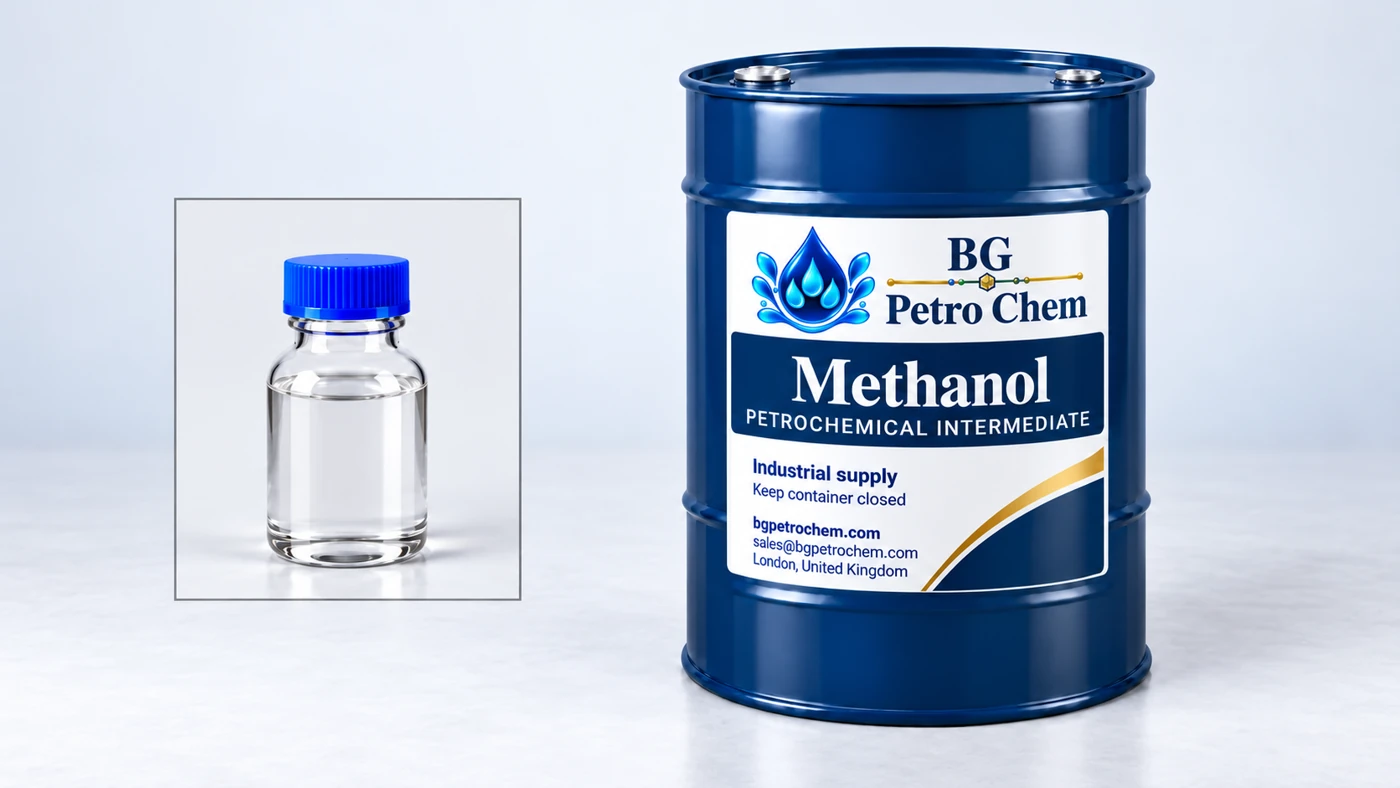
Methanol
Methanol (methyl alcohol, CAS 67-56-1), 99% minimum, packed in 160 kg drums or ISO tanks for formaldehyde, acetic acid and MTBE producers and for process solvent users. It is toxic by all routes of exposure and its flame is almost invisible in daylight.
Methyl tert-Butyl Ether (MTBE)
High-purity methyl tert-butyl ether (MTBE, CAS 1634-04-4) at 99.0 wt% minimum with methanol max 0.05 wt%, for pharmaceutical extraction, cracking to high-purity isobutylene and gasoline octane blending. Supplied in 150 kg drums or ISO tanks.
Cyclohexane
Cyclohexane (CAS 110-82-7) of 99.9% minimum purity, benzene 50 mg/kg max. The starting material for KA oil in the nylon 6 and nylon 6,6 chain, and a non-aromatic solvent for resins, rubber and coatings. Note its freezing point of 6.5 °C.
n-Hexane
n-Hexane (CAS 110-54-3) offered at 60, 70, 80, 97 and 99% minimum n-hexane content, boiling at 64–70 °C with benzene at 0.01% max. The 60–80% grades serve oilseed extraction; the 97% and 99% grades suit pharmaceutical and polymer work.
n-Heptane
n-Heptane (CAS 142-82-5) at 99% minimum, with total aromatics 50 ppm max and sulphur 1 ppm max; a 97% grade can also be supplied. It sets zero on the octane scale and is the usual lower-toxicity substitute for hexane in pharmaceutical processing.
Isohexane
Isohexane (CAS 107-83-5), at least 98% branched C6, mainly 2- and 3-methylpentane, with n-hexane limited to 1.5% and benzene to 1 ppm. A fast-evaporating alternative for adhesive, cleaning and extraction users who need to remove n-hexane exposure.
Isooctane (2,2,4-Trimethylpentane)
Isooctane (2,2,4-trimethylpentane, CAS 540-84-1), a 99.9% grade with 99 wt% minimum content, aromatics 0.02 wt% max and sulphur 5 ppm max. It defines 100 on the octane scale and is a named solvent in fats and oils methods such as peroxide value.
Petroleum Ether
Petroleum ether (CAS 8032-32-4): a light aliphatic hydrocarbon solvent, mainly pentanes and hexanes, containing no actual ether. Supplied at 99% minimum in a boiling-range cut agreed at order, for crude fat determination, natural product extraction and chromatography.
Methylcyclohexane
Methylcyclohexane (CAS 108-87-2), 99.5% minimum and typically 99.9%, with toluene 10 ppm max and benzene not detected. Made by hydrogenating toluene, it gives adhesive, coating and extraction users toluene-like solvency without the aromatic ring.
Ethylcyclohexane
Ethylcyclohexane (CAS 1678-91-7) at 99.6% minimum, produced by hydrogenating ethylbenzene, with ethylbenzene capped at 0.5% and water at 0.1%. A slow-evaporating naphthenic solvent boiling near 132 °C, also used in synthesis and fuel research.
Isopropanol (IPA)
Isopropanol (IPA, CAS 67-63-0) at 99.9% minimum purity: a fast, clean-evaporating solvent for electronics and precision cleaning and for pharmaceutical, coating and ink processes, and the base that sanitiser makers dilute to about 70%. In 160 kg drums or ISO tanks.
MEG - Mono Ethylene Glycol
Mono ethylene glycol (MEG, CAS 107-21-1) goes mostly into polyester, as the diol that reacts with terephthalic acid to make PET fibre, film and bottles. Fibre grade is typically 99.9% minimum purity; industrial grade serves antifreeze and heat-transfer fluids.
MPG - Mono Propylene Glycol
Mono propylene glycol (MPG, propane-1,2-diol; CAS 57-55-6, EINECS 200-338-0) in industrial and USP/EP grades at typically 99.5% min assay. Its low toxicity makes it the glycol chosen over MEG wherever food, drinking water, people or animals may be exposed.
DPG - Dipropylene Glycol
Dipropylene glycol (DPG; CAS 25265-71-8, EINECS 246-770-3), an isomer mixture at typically 99.5% min purity, in industrial and low-odour fragrance grades: the standard perfume diluent and a diol for unsaturated polyester and alkyd resins.
DEG - Diethylene Glycol
Diethylene glycol (DEG, CAS 111-46-6) for industrial use: a hygroscopic solvent, natural gas dehydration glycol and polyol for polyester and polyurethane. Acutely toxic to the kidneys, it must be kept well apart from glycerine and propylene glycol.
MEA - Monoethanolamine
Monoethanolamine (MEA, CAS 141-43-5) is the reference amine for acid gas removal and post-combustion CO2 capture. It binds carbon dioxide chemically, so it keeps absorbing at the low partial pressures of flue gas, where physical solvents take up too little.
DEA - Diethanolamine
Diethanolamine (DEA, CAS 111-42-2) is a secondary amine for acid gas removal, with lower solvent losses than MEA, and a feedstock for diethanolamide surfactants. Its use in cosmetics is now restricted because secondary amines can form nitrosamines.
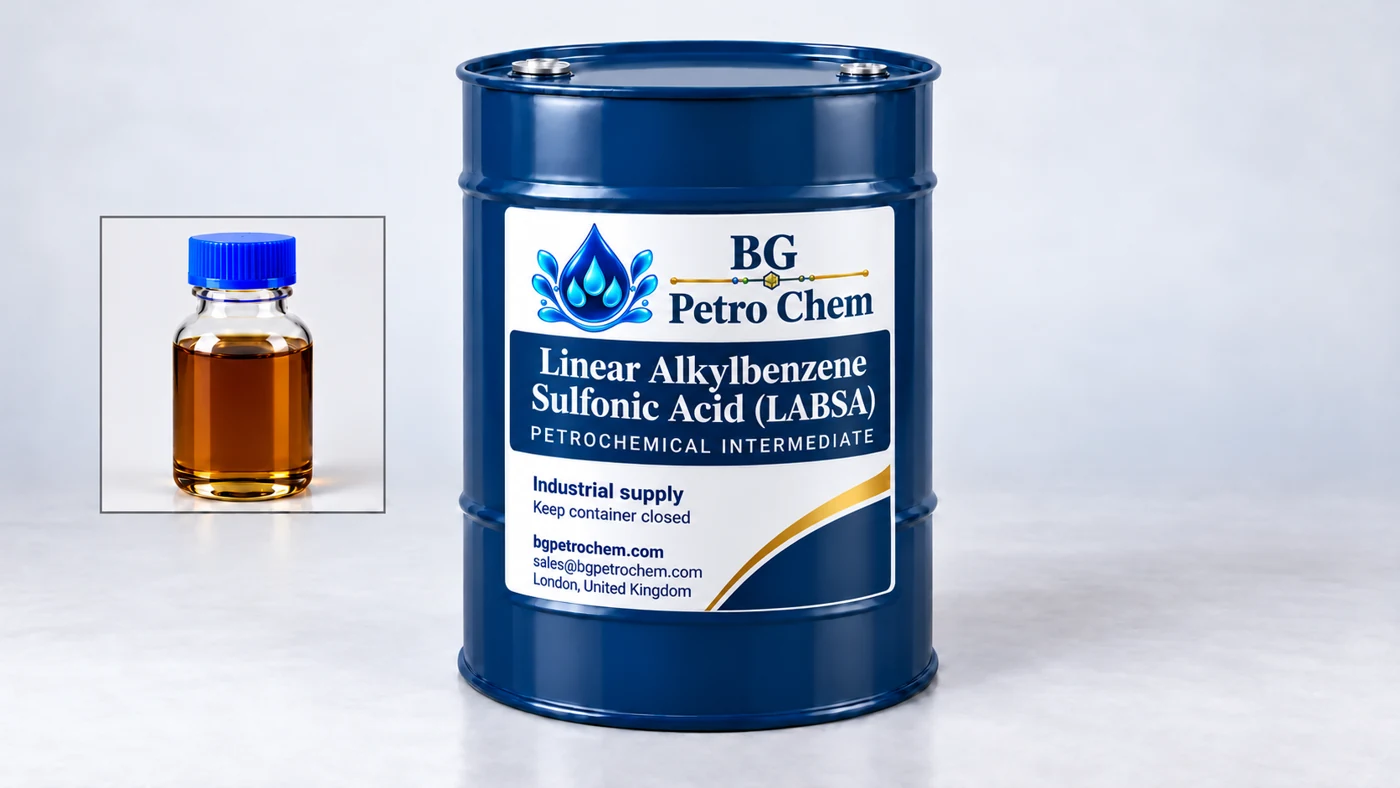
Linear Alkylbenzene Sulfonic Acid (LABSA)
LABSA (CAS 27176-87-0) is the dark brown, viscous acid form of linear alkylbenzene sulfonate, supplied at 96% minimum active matter. Once neutralised by the formulator it becomes the main anionic surfactant in laundry powders and dishwash liquids. 215 kg drums or IBCs.
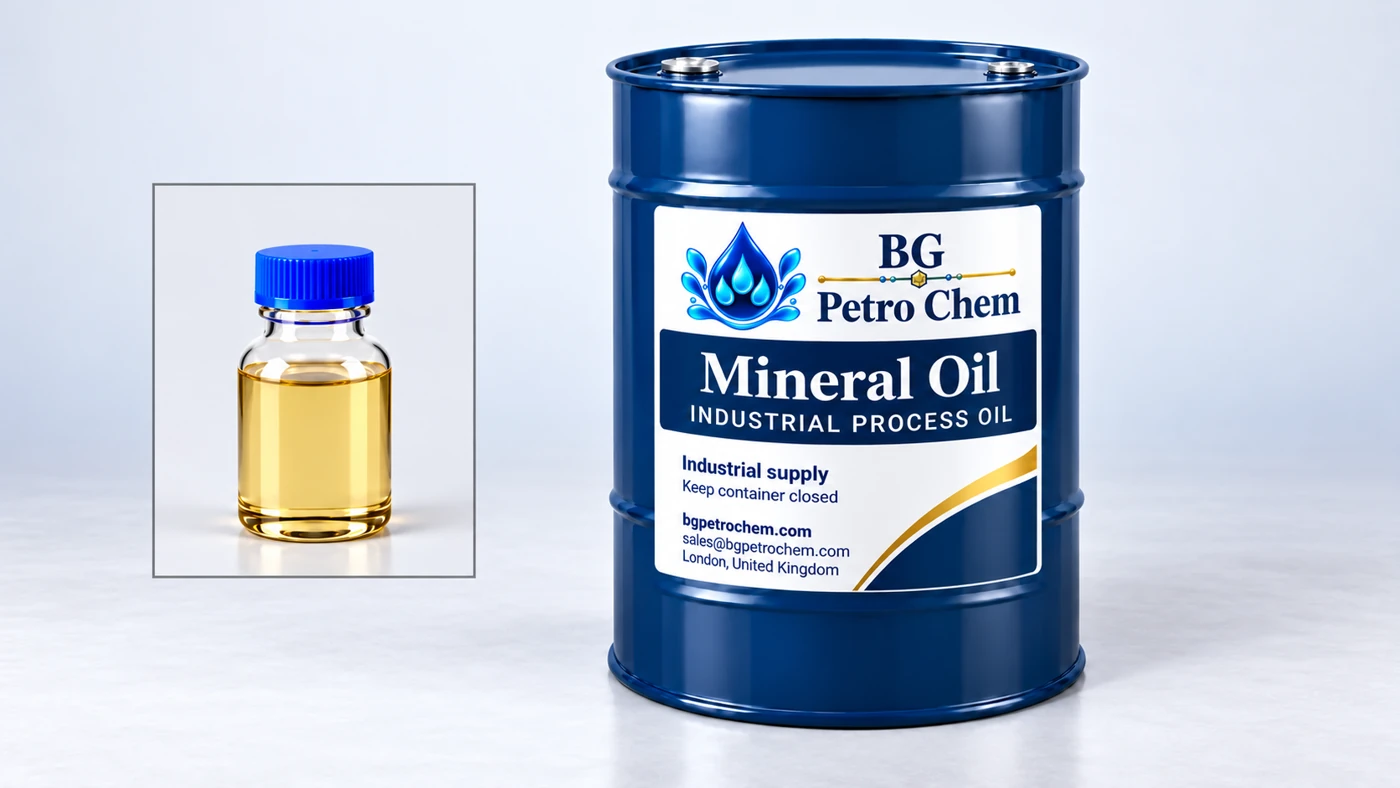
Mineral Oil
Mineral oil is a mix of saturated hydrocarbons distilled from crude petroleum and refined, usually by hydrotreating, to strip out aromatics and unsaturates. Technical, food and pharmaceutical grades are offered; state grade and intended contact at enquiry.
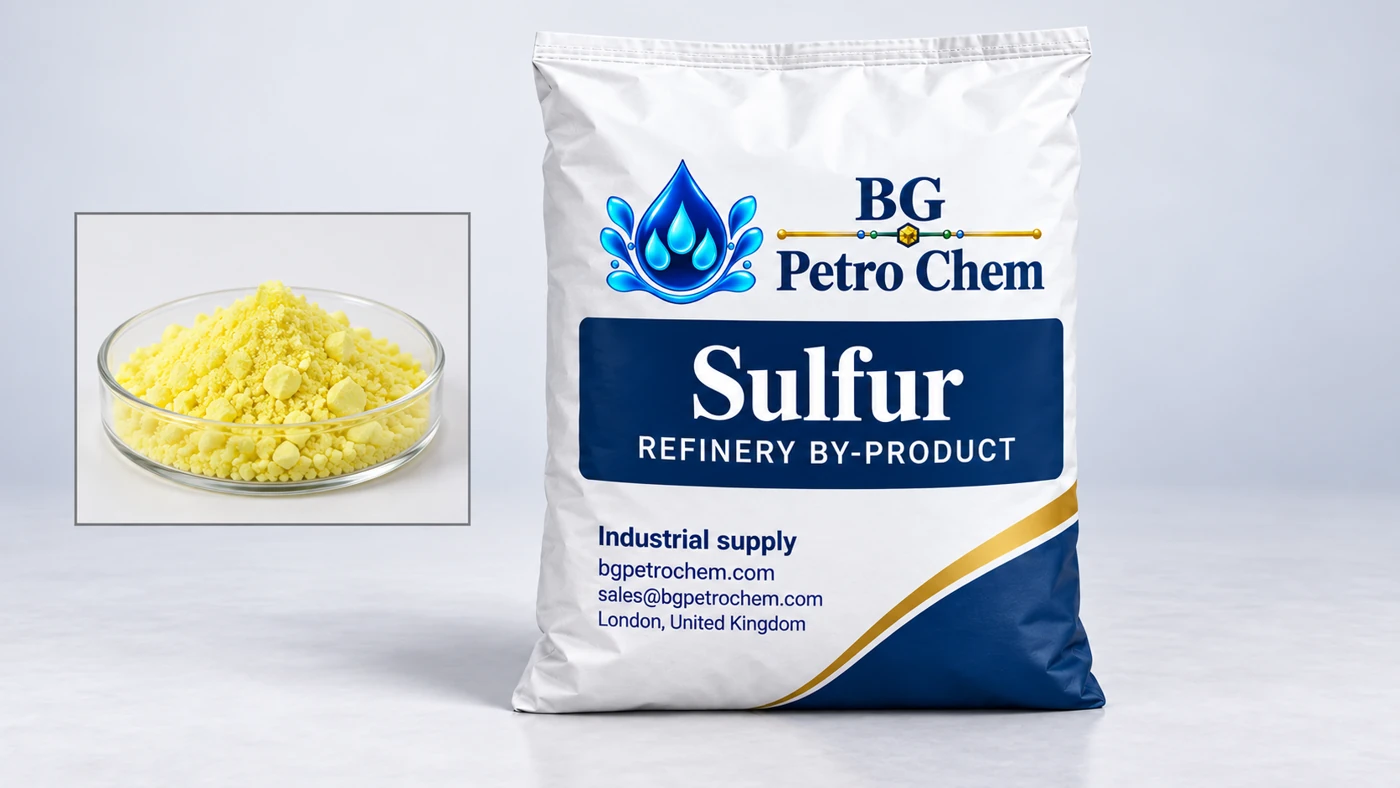
Sulfur
Sulphur (CAS 7704-34-9) recovered at refinery HDS and Claus units in Pakistan, as bright yellow granules or lumps with a minimum purity of 99.8 wt%. Uses include sulphuric acid, rubber vulcanisation, fertilisers and bitumen modification.
Need a Custom Solution?
Contact our team to discuss your specific requirements for the Chemical & Pharmaceutical Processing industry.