Candles, Packaging & Polishes
Candle makers, board converters, match and firelighter producers and polish formulators work with paraffin, slack and synthetic waxes. Melting point and the oil left in the wax decide hardness, gloss, burn and barrier performance, so both head every wax specification.
Application requirements
Fully refined paraffin wax, with less than 0.5% oil and melting grades from 50 to 68 °C, is white and odourless and suits container, pillar and taper candles, paper and board coatings and crayons. Semi-refined paraffin, with 0.5 to 1.5% oil, costs less and releases from moulds more easily, at the price of a faint odour and slight colour, and serves candles, matches, corrugated board and polishes. The slack waxes, LMO (47 to 53 °C), SPO (53 to 58 °C), MMO (58 to 64 °C) and DAO (69 to 74 °C), carry more oil and serve as low-cost base waxes and extenders for candles, matches and firelighters, as moisture barriers on corrugated board and in wax emulsions. Microcrystalline wax adds flexibility and tack, helping container candles hold to the glass and improving barrier coatings and laminations. Polyethylene wax at one to three percent hardens a candle and raises its gloss. Fischer-Tropsch and oxidised polyethylene waxes give hardness and shine to polishes and emulsifiable wax systems, and white spirit is the carrier in solvent-based polishes. Gel wax, white mineral oil gelled with a polymer resin, makes transparent candles: the soft grade in containers, the hard grade as free-standing shapes.
Specification checkpoints
Agree congealing point (ASTM D938) or drop melting point (ASTM D127), oil content (ASTM D721), needle penetration (ASTM D1321), colour (Saybolt for refined grades, ASTM D1500 for slack waxes), odour and kinematic viscosity at 100 °C. For wax that will touch food or food packaging, ask for the producer's food-contact declaration against the regulation that applies in your market. For gel wax, follow the stated maximum heating temperature of 110 to 120 °C, pour at 85 to 95 °C and keep fragrance to about 3 to 5%.
Grade selection
Container candles generally use lower-melting refined paraffin, sometimes with a little microcrystalline wax for adhesion, while pillars and tapers use higher-melting grades with polyethylene wax for hardness and gloss. Tealights and budget candles can use semi-refined paraffin or blends with slack wax. Firelighters and matches use slack wax LMO or SPO, and board converters use slack wax SPO or MMO, often as emulsions. Floor and shoe polishes combine harder synthetic waxes with paraffin and white spirit or an emulsion system.
Handling and documentation
Molten wax causes serious burns: melt it with temperature-controlled equipment, never over an open flame unattended, and keep it well below its flash point. Overheating gel wax discolours it and creates a fire risk. Slack waxes can sweat oil in warm storage, so keep them cool and out of direct sun. White spirit is flammable and needs ventilated storage away from ignition sources. Wax spills and pastilles on floors are a slip hazard. Request the specification, safety data sheet and a sample so you can run a burn or coating trial before ordering production volumes.
Products for Candles, Packaging & Polishes
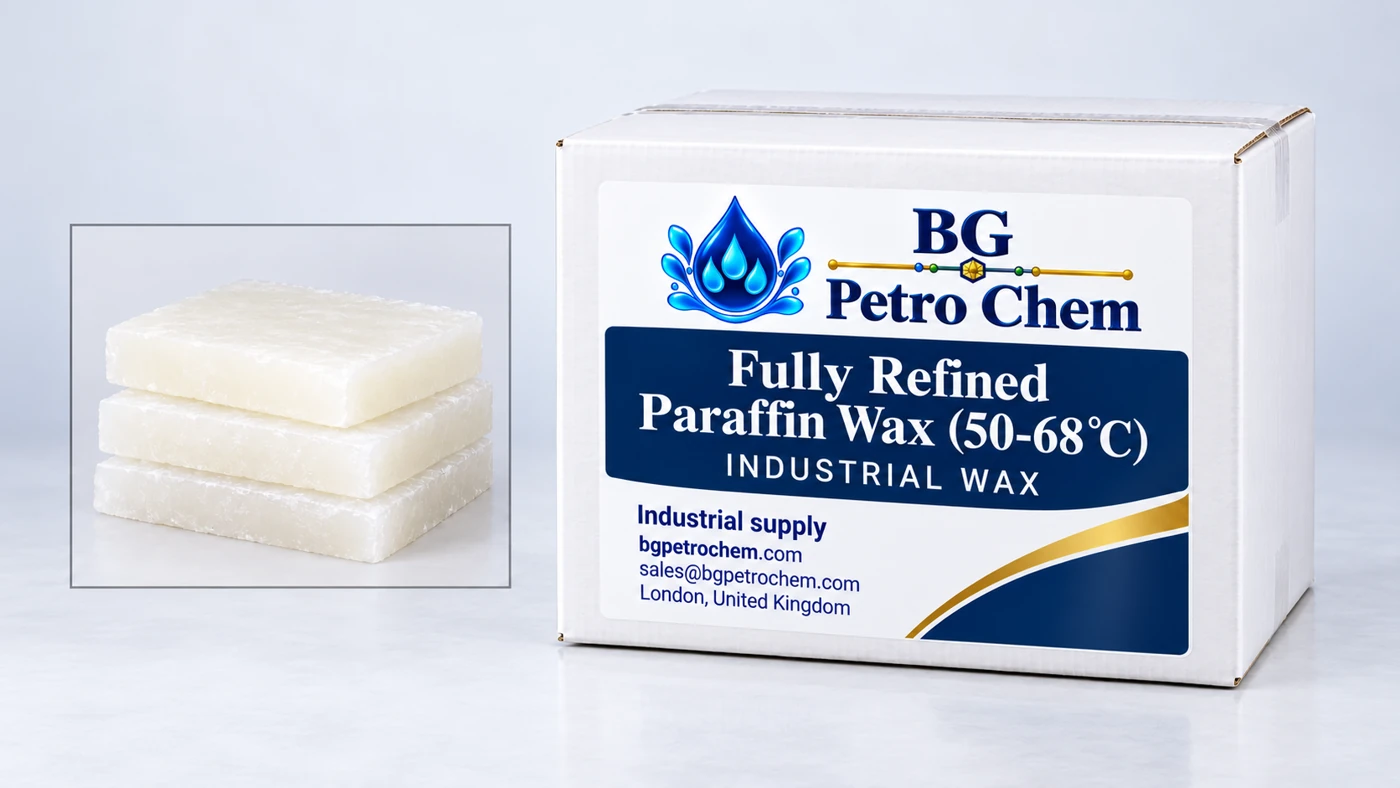
Fully Refined Paraffin Wax (50-68°C)
With deoiling and hydrotreating taking its oil content below 0.5%, fully refined paraffin wax (CAS 8002-74-2) is white, effectively odourless and refined to the standard food-contact and cosmetic uses call for. Melting grades run from 50 to 68 °C: lower points for container candles, higher for pillars and tapers.
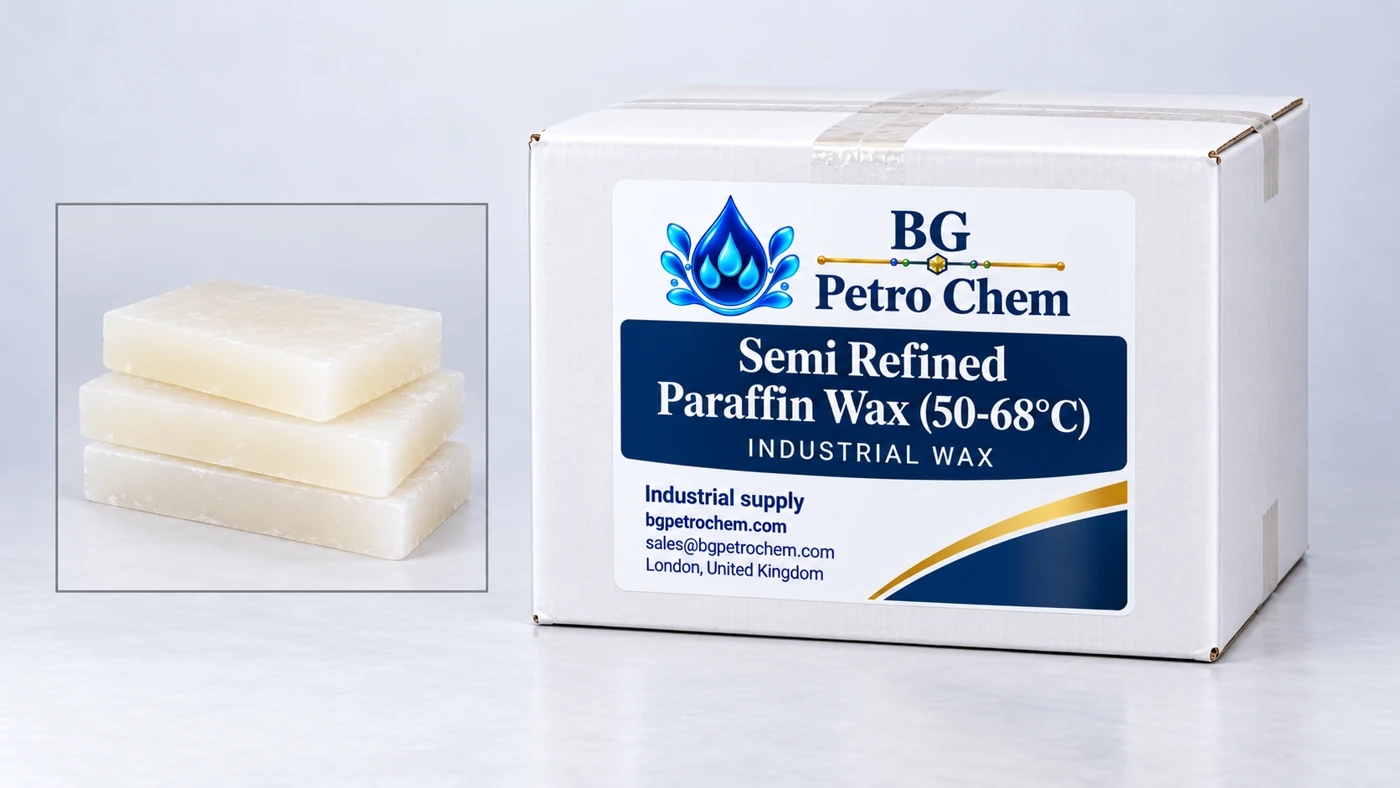
Semi Refined Paraffin Wax (50-68°C)
With 0.5–1.5% oil left in it, against no more than 0.5% in fully refined wax, semi refined paraffin wax (CAS 8002-74-2) costs less and releases from moulds more easily, at the expense of a faint odour and a slightly creamy colour.
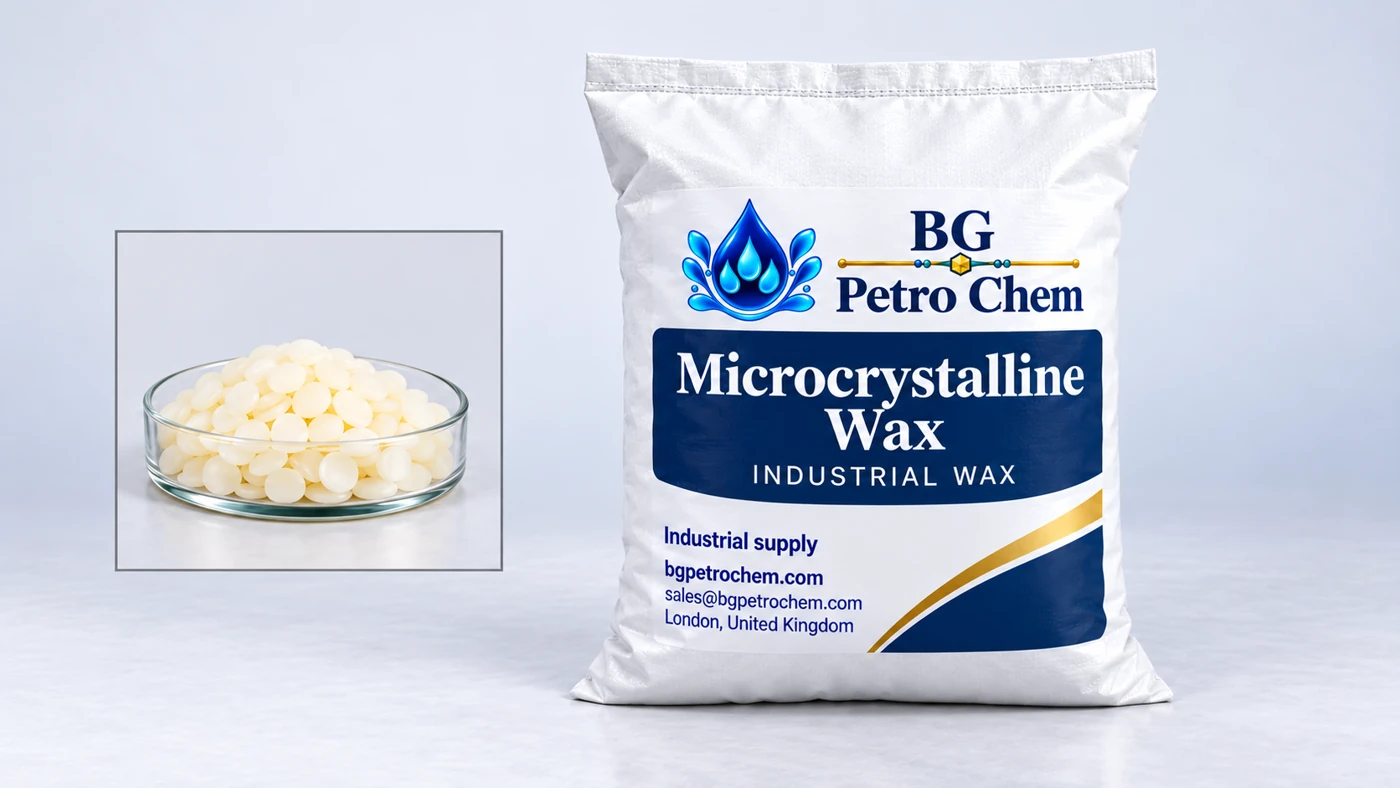
Microcrystalline Wax
Built from branched isoparaffins and cyclic naphthenes, microcrystalline wax (CAS 63231-60-7) is a petroleum wax whose molecules pack poorly. Only very small crystals form, so it is flexible, tough and tacky and binds far more oil than brittle paraffin.
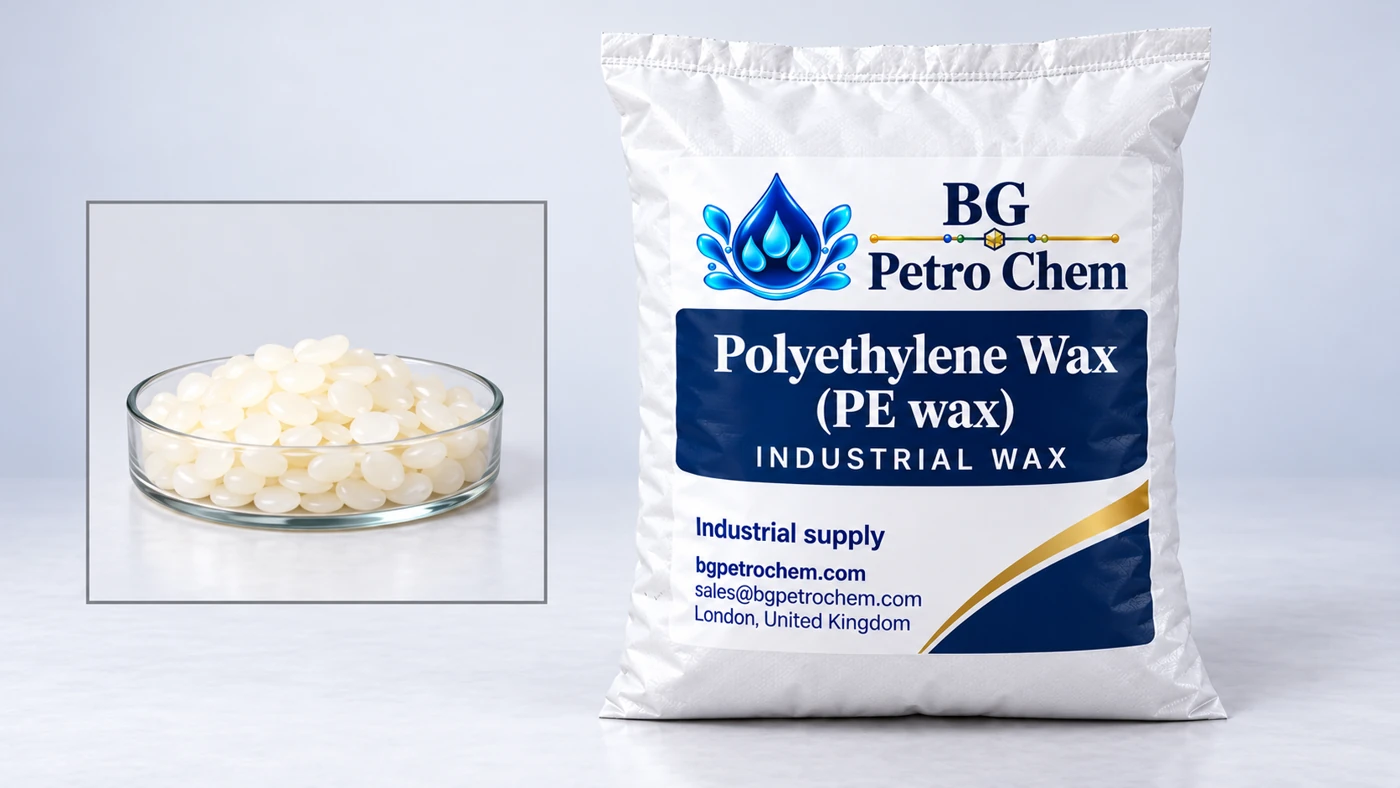
Polyethylene Wax (PE wax)
Polyethylene wax (CAS 9002-88-4) is a polyethylene of low molecular weight with a melting range of about 100–130 °C. It lubricates PVC, PE, PP and EVA compounds, lowers melt viscosity, aids pigment dispersion and, at 1–3%, hardens candle wax.
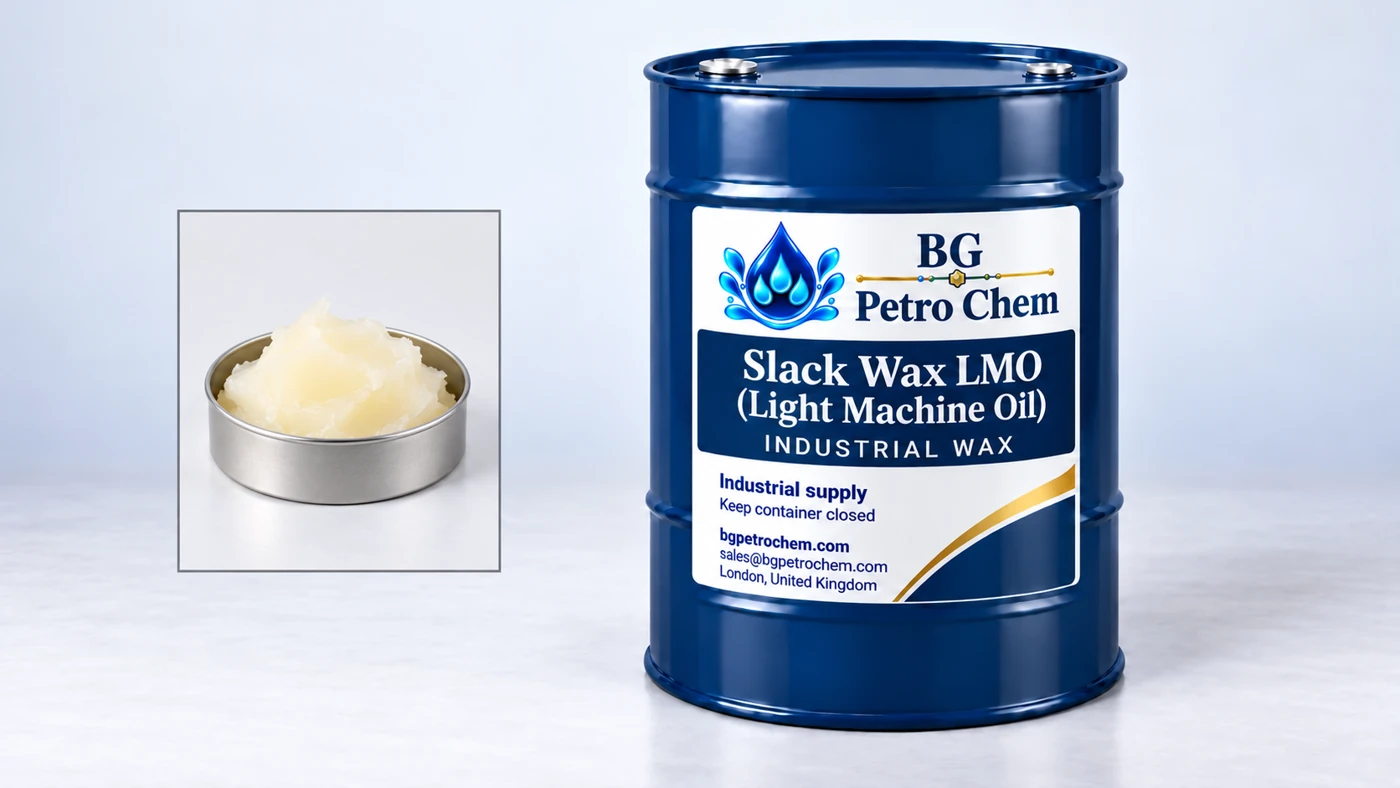
Slack Wax LMO (Light Machine Oil)
Slack Wax LMO (CAS 64742-61-6) is the light machine oil cut of the slack wax series. Melting at 47–53°C with 10–25% oil and 3.1–4.2 cSt at 100°C, it is the softest and most fluid of the four grades.
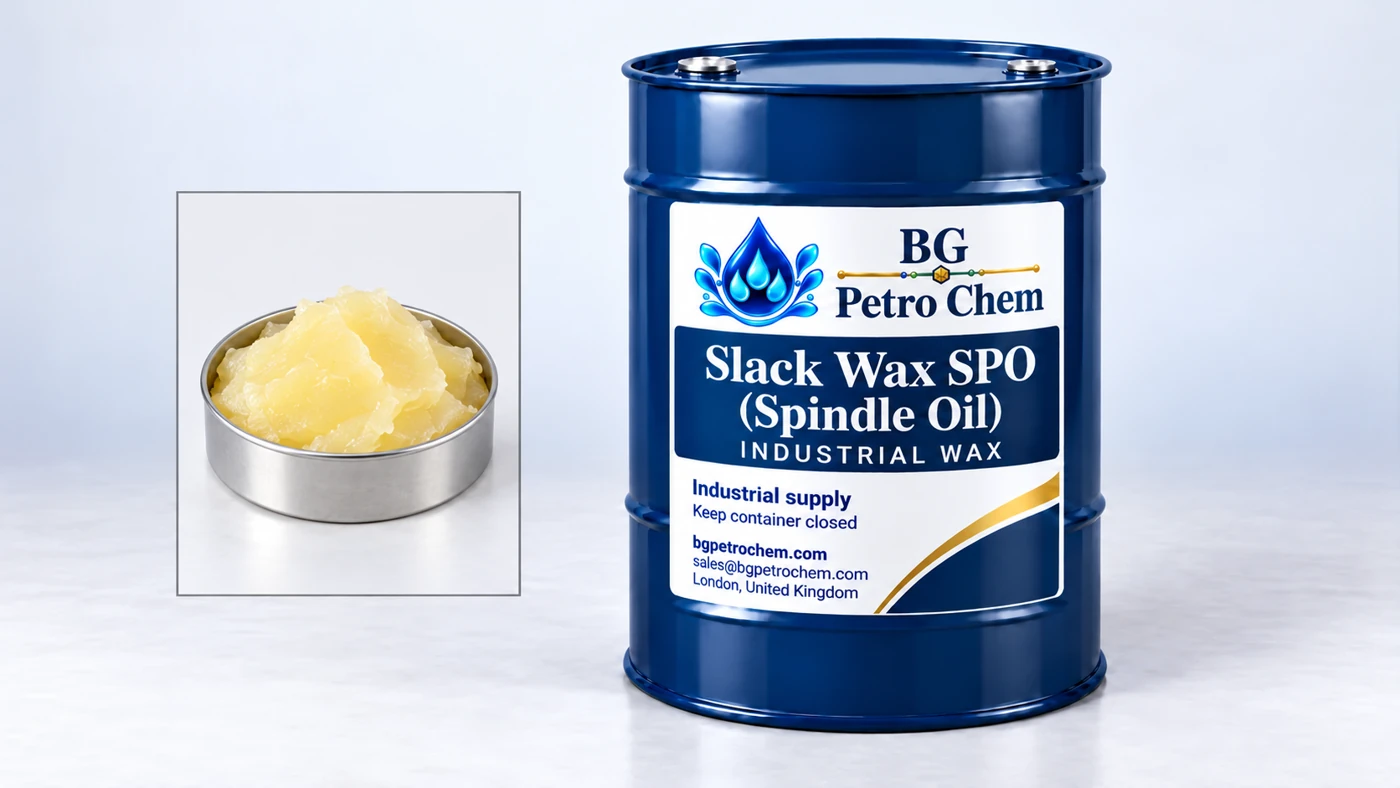
Slack Wax SPO (Spindle Oil)
Taken unrefined from the spindle oil distillate, Slack Wax SPO (CAS 64742-61-6) melts at 53–58°C, holds 5–20% oil and has a viscosity of 4.7–5.7 cSt at 100°C. At ASTM colour 1.5 max it is the second palest of the four grades, after LMO.
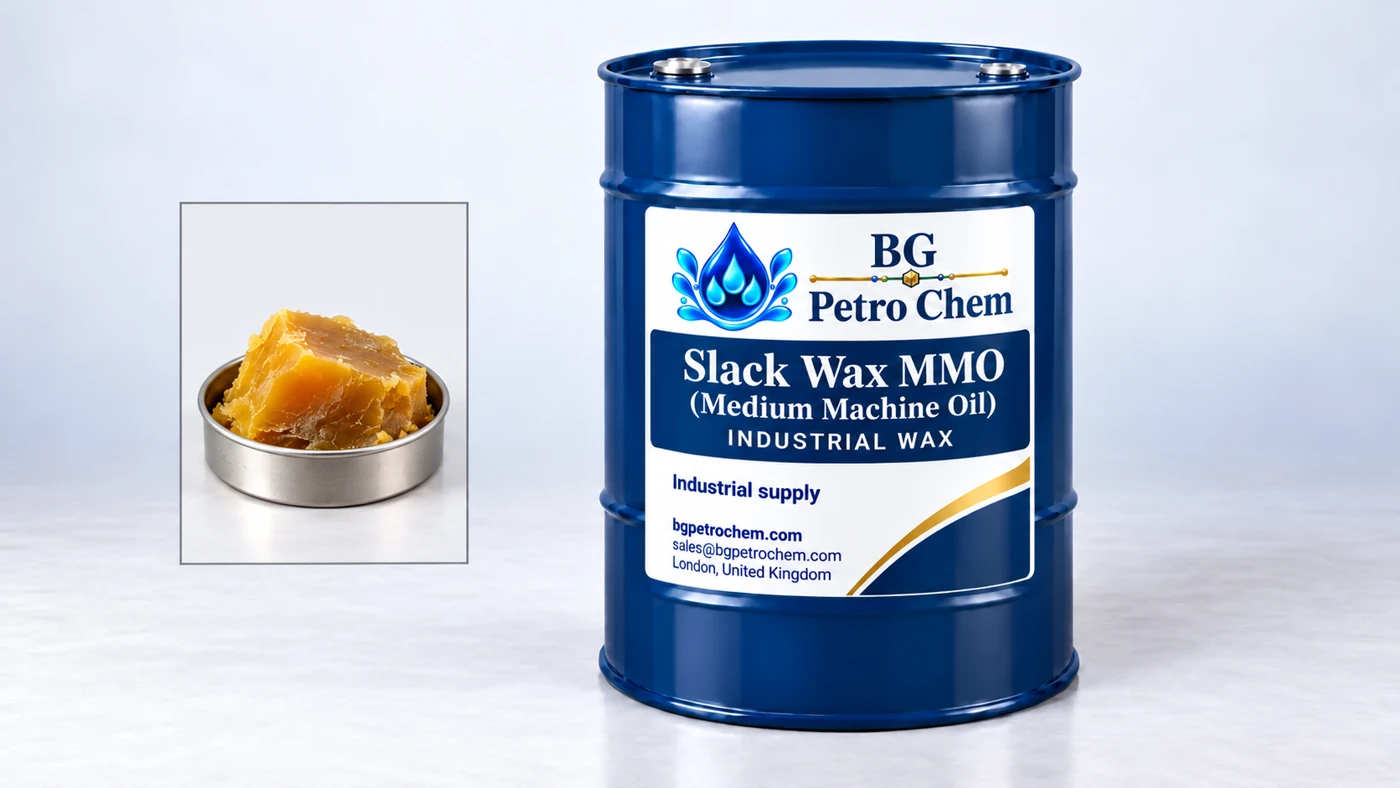
Slack Wax MMO (Medium Machine Oil)
Slack Wax MMO (CAS 64742-61-6) is taken from the medium machine oil distillate. With a 58–64°C melting point, 5–15% oil and 8.3–9.4 cSt at 100°C, it is firmer than LMO and SPO and suits uses that need a heavier wax feedstock.
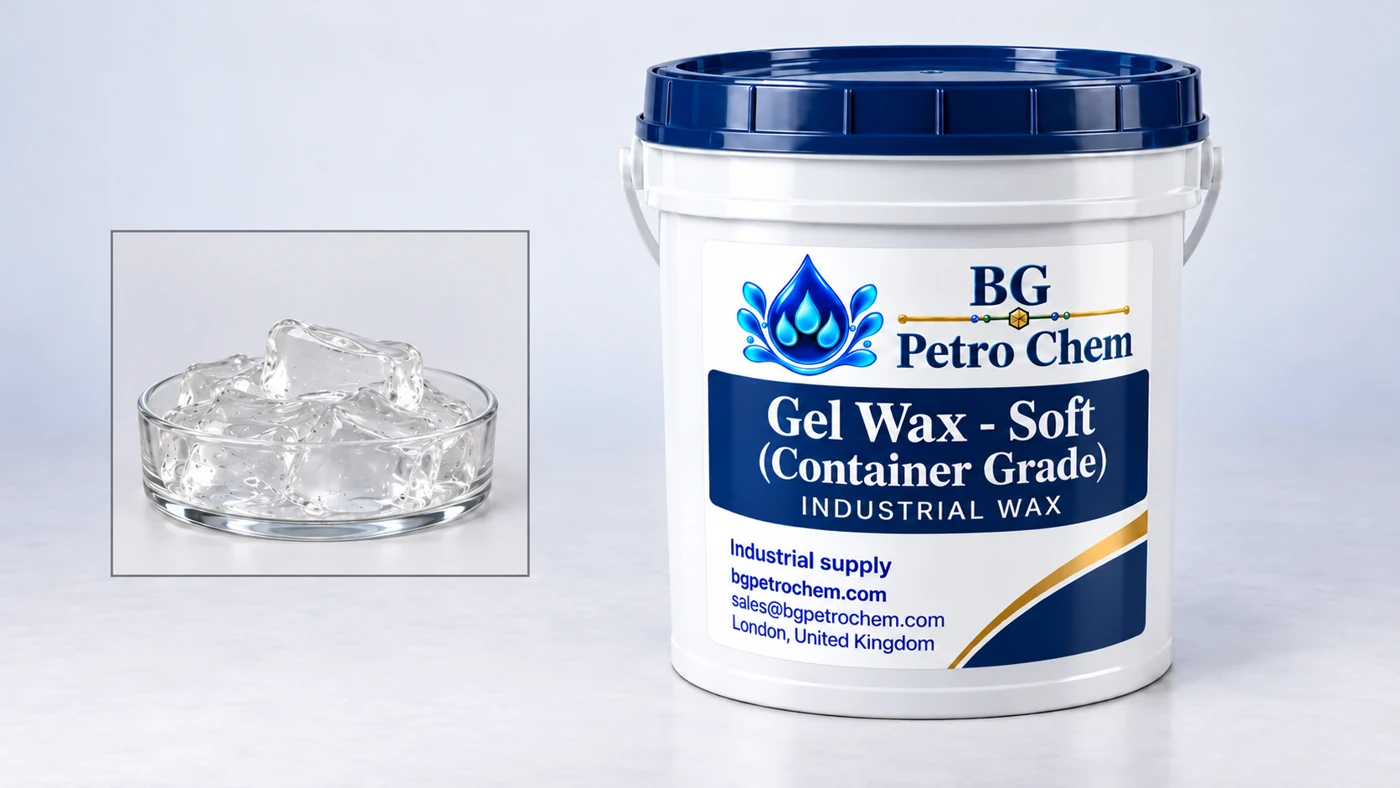
Gel Wax - Soft (Container Grade)
Soft gel wax is white mineral oil gelled with a lighter polymer dose than the moulded hard grade, which makes it the container grade. It flows freely and releases air for the clearest finish, but it must be burned in the vessel it fills.
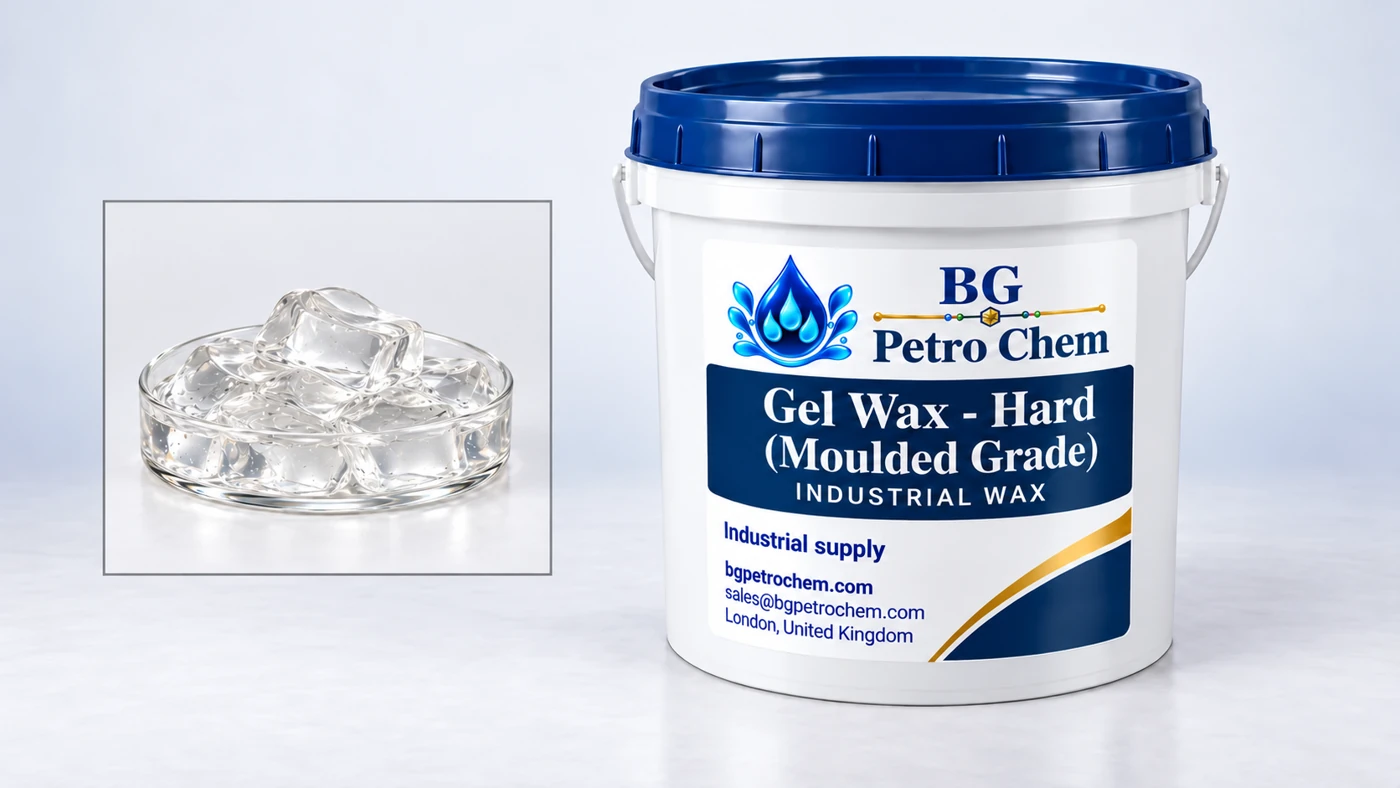
Gel Wax - Hard (Moulded Grade)
Hard gel wax is the moulded grade of transparent candle gel: white mineral oil set with a high loading of polymer resin. It melts at 60–80 °C and is firm enough to be demoulded and stand unsupported, keeping embeds where they are placed.
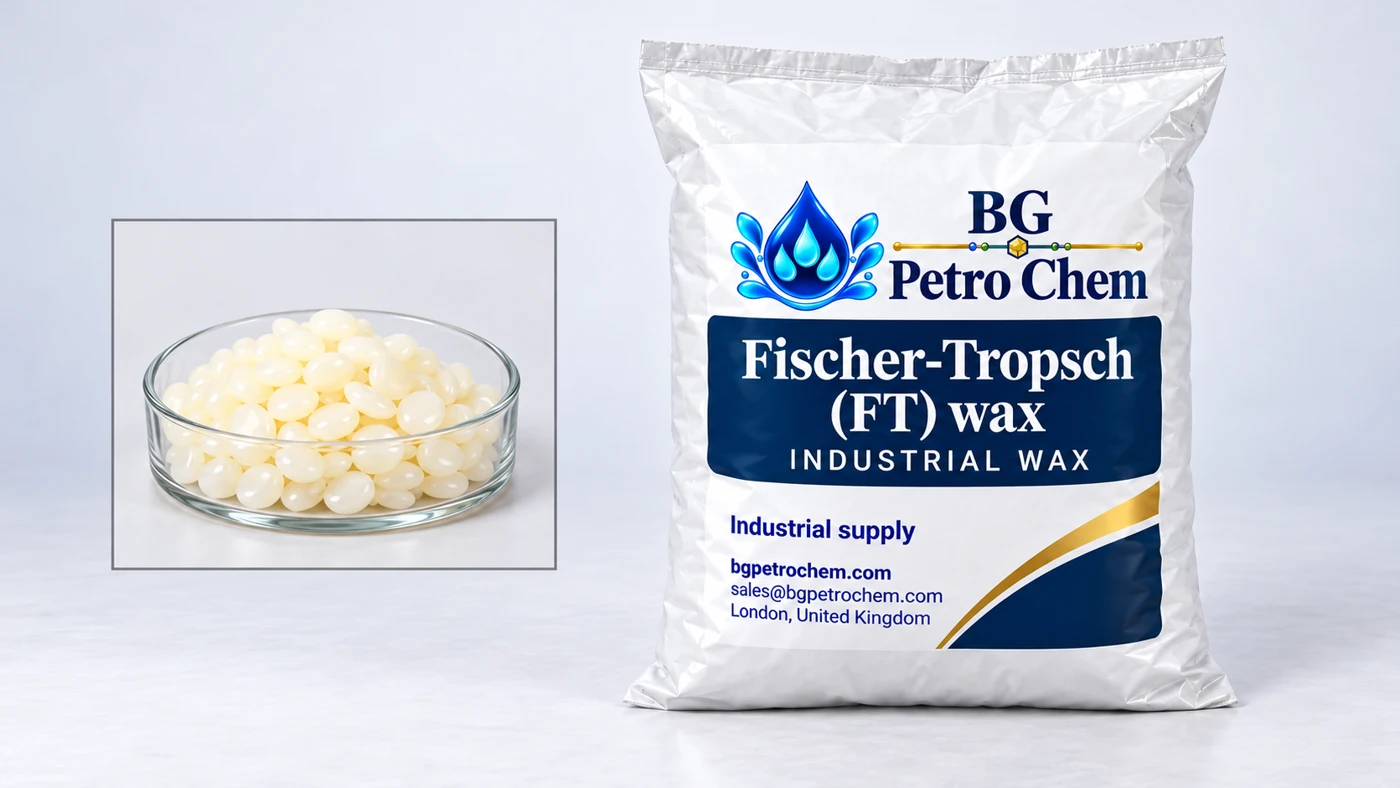
Fischer-Tropsch (FT) wax
FT wax is a high-purity synthetic paraffin made from syngas, with a narrow carbon-chain spread, very low oil content, a high melting point and low melt viscosity. It adds hardness and lubrication to PVC, hot melts, inks, coatings and bitumen.
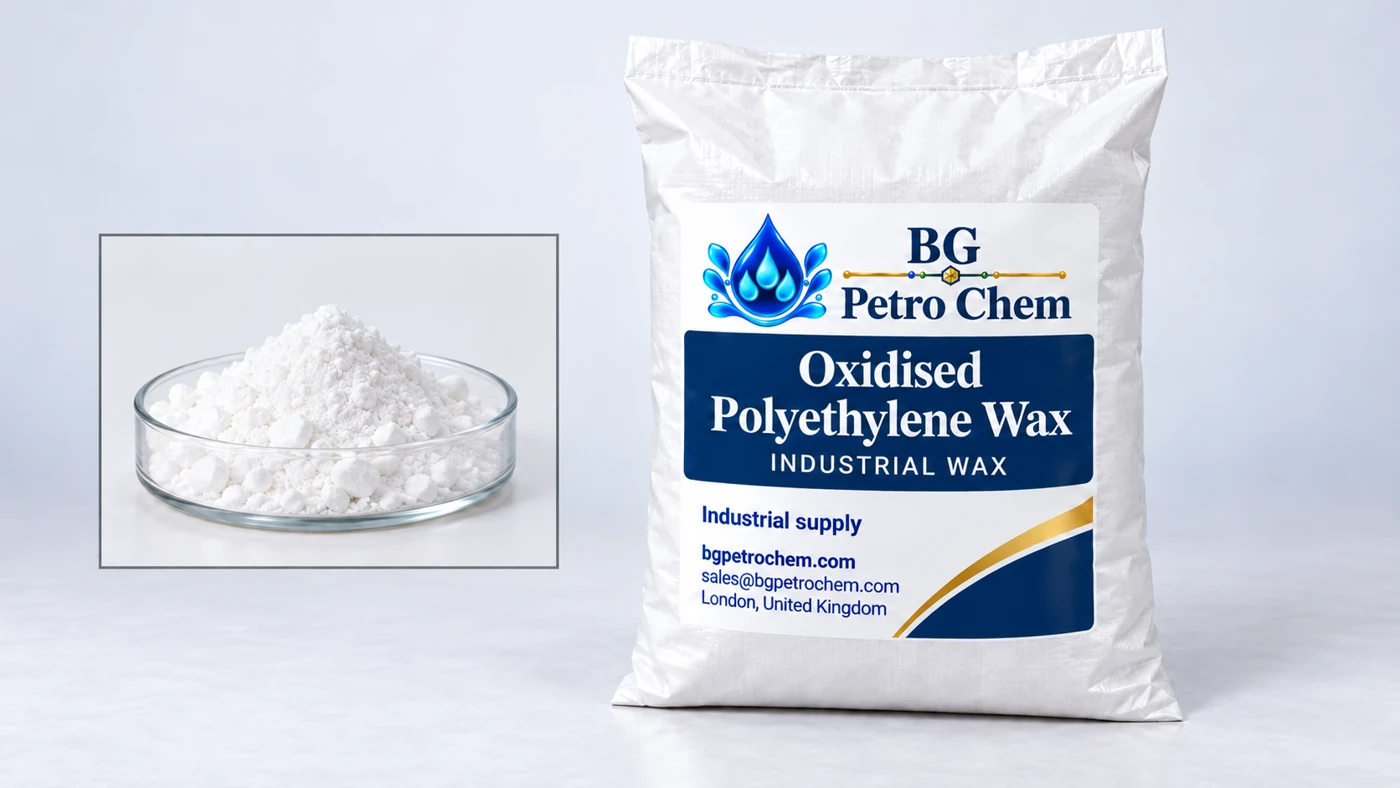
Oxidised Polyethylene Wax
Oxidised polyethylene wax is a low molecular weight HDPE wax given carboxyl and hydroxyl groups by controlled air oxidation. That polarity lets it wet pigments and disperse fillers while it lubricates, which plain PE wax cannot do.
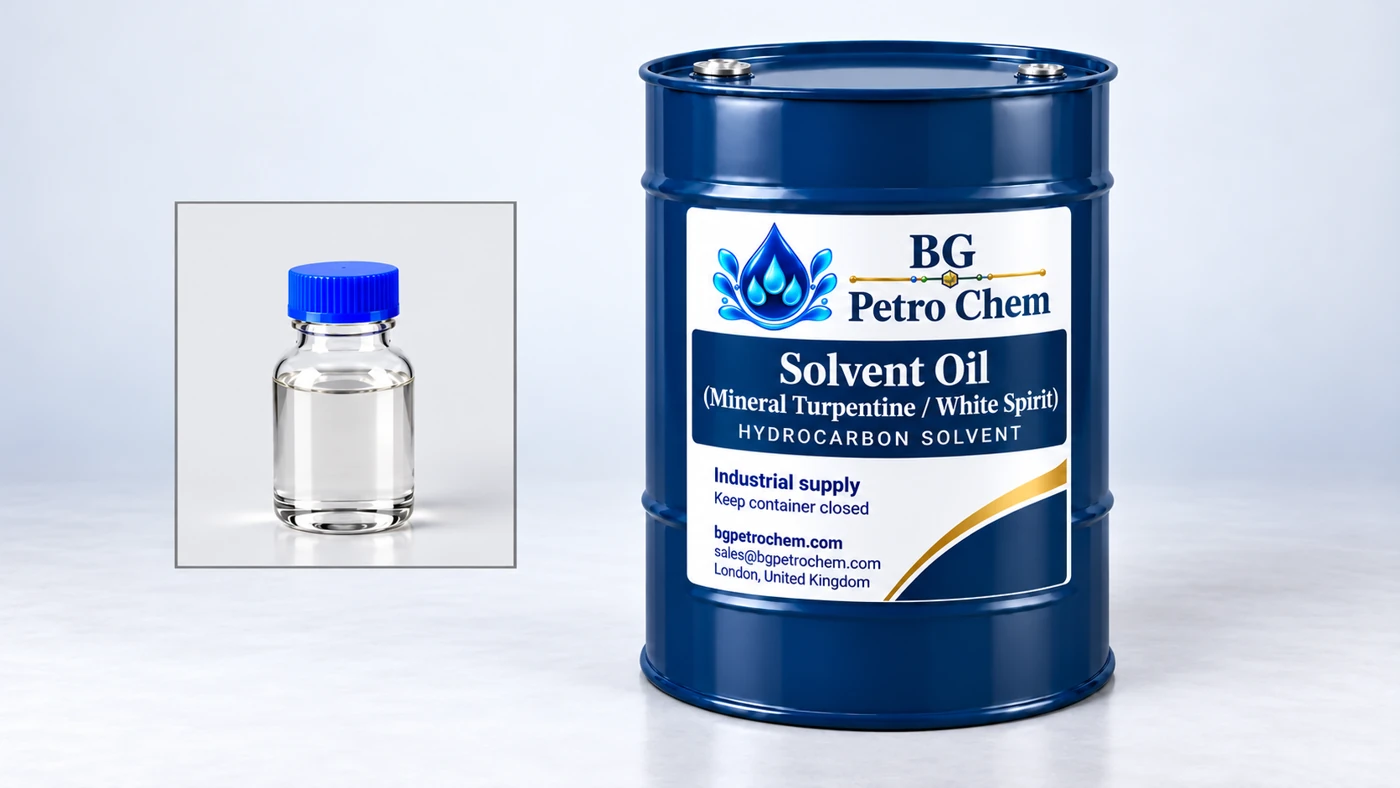
Solvent Oil (Mineral Turpentine / White Spirit)
A bright, clear petroleum solvent of Pakistani origin, sold as mineral turpentine or white spirit, for thinning alkyd paints and varnishes and for cleaning and degreasing. Aromatics are limited to 8.0 vol % and sulphur to 0.05 wt %, and the doctor test is negative.
Need a Custom Solution?
Contact our team to discuss your specific requirements for the Candles, Packaging & Polishes industry.