Power & Electrical Insulation
Transformer builders, utilities and cable makers buy insulating oils, plasticisers, PVC resin and waxes for their electrical properties. Traces of water, particles or polar contaminants lower breakdown voltage, so these grades are bought against a named standard and a test report.
Application requirements
Mineral insulating oil fills transformers, reactors, switchgear and circuit breakers, where it insulates live parts and carries heat away from the windings. IEC 60296 groups these oils by type and by inhibition: EIOS T2-HI is a high-grade inhibited oil whose added antioxidant extends oxidation life but is consumed in service, while EIOS T2-U is an uninhibited oil that relies on the natural inhibitors left by refining. Transformer base oil is supplied to blenders who finish their own insulating oils. In cable, PVC insulation and sheathing compounds are built on suspension resin plasticised with DINP, DOTP or DPHP, and with TOTM for cable rated to continuous high temperature. Oxidised polyethylene wax is used in PVC filling compounds for fibre-optic and telecom cable, and microcrystalline, fully refined paraffin and slack DAO waxes in insulation and jacketing compounds. Isopropanol is the standard cleaning solvent in electronics manufacture.
Specification checkpoints
For insulating oils, agree the IEC 60296 type and inhibitor content, viscosity at 40 °C, pour point, density, flash point, breakdown voltage as delivered and after treatment, dielectric dissipation factor at 90 °C, water content, acidity, oxidation stability, corrosive sulphur and confirmation that PCBs and DBDS are not detectable. The grades in this range are offered at viscosity max 12 mm²/s at 40 °C, pour point below minus 40 °C and breakdown voltage min 30 kV as delivered, and the uninhibited grade at min 70 kV after treatment. The as-delivered figure is lower because oil in drums and tanks picks up moisture, which is why oil is dried and degassed before filling. For cable plasticisers, agree ester content, acid value, volatility and volume resistivity; for PVC resin, K value, volatile matter and an electrical-grade specification where the compound requires one.
Grade selection
New power, generator step-up and long-service transformers are often specified with inhibited oil, and the inhibitor level is then checked during maintenance; utilities with an uninhibited tradition specify oils such as T2-U. For topping up, use oil of the same type as the oil already in the unit, and check compatibility before mixing inhibited and uninhibited oils. Cable compounders pair suspension resin with DINP or DOTP for general wiring, DPHP where low volatility matters, and TOTM for high-temperature ratings.
Handling and documentation
Keep insulating oil sealed and dry: open drums only in dry conditions, use clean dedicated hoses and filters, and sample into clean glass bottles so a test result reflects the oil and not the container. Insulating oils are combustible, so control ignition sources during filling and treatment. Isopropanol is highly flammable and needs flammable-liquid storage. DINP and DPHP are phthalates, so check end-use restrictions and the safety data sheet before selecting one. Request the specification, safety data sheet and batch test report for each consignment.
Products for Power & Electrical Insulation
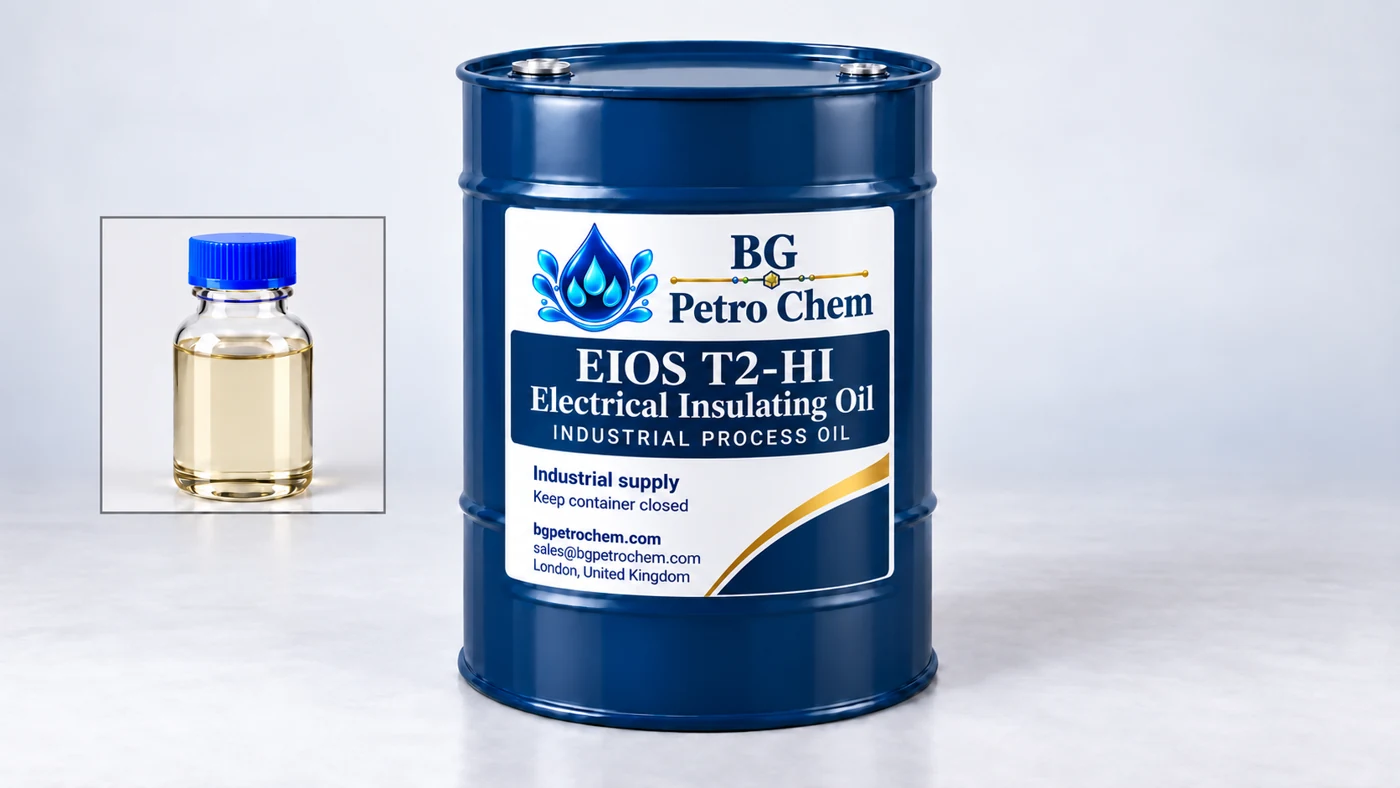
EIOS T2-HI Electrical Insulating Oil
EIOS T2-HI is an inhibited Type A mineral insulating oil to IEC 60296:2020 for transformers and switchgear. Its added antioxidant greatly lengthens oxidation life, but it is used up in service, so inhibitor content has to be tracked.
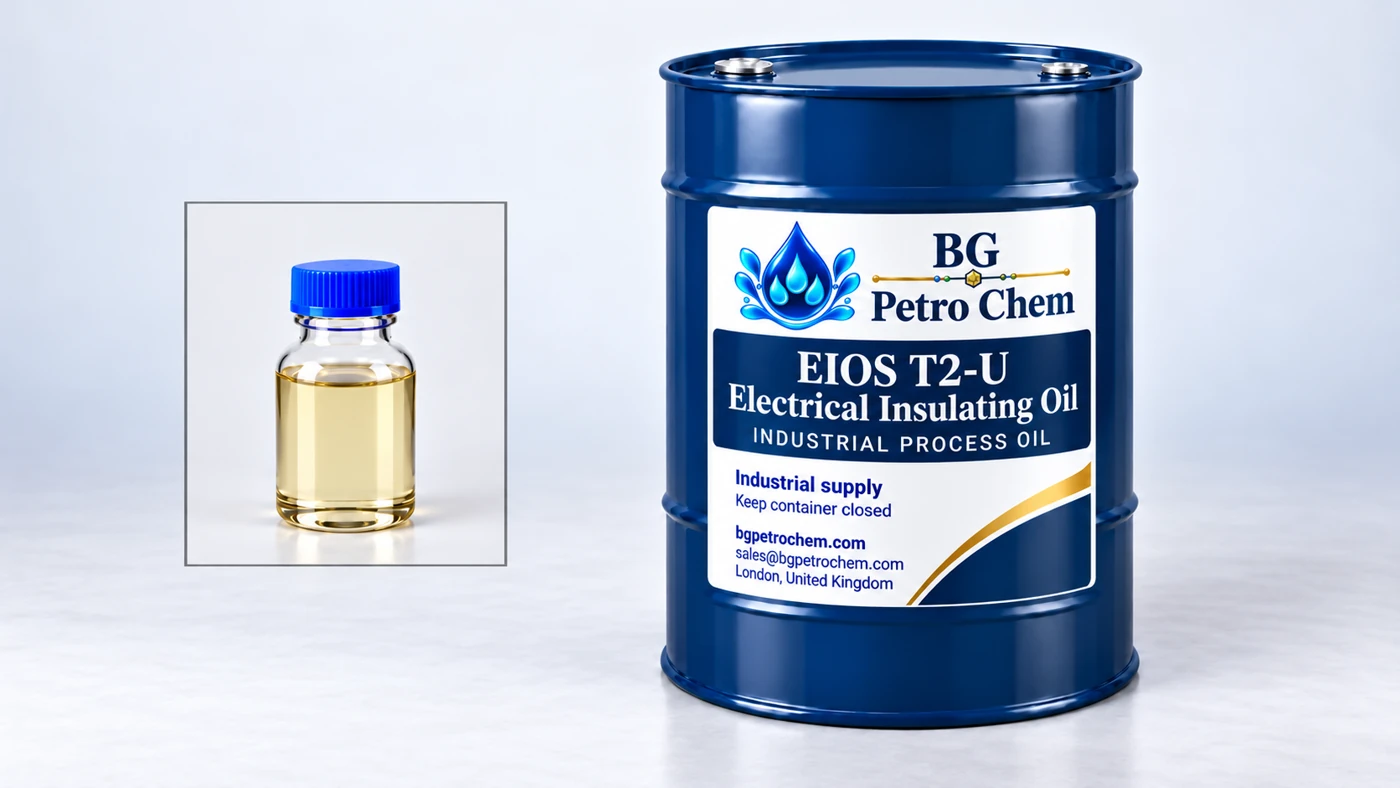
EIOS T2-U Electrical Insulating Oil
EIOS T2-U is an uninhibited mineral insulating oil to IEC 60296:2020 (Type B, TVBU). It has no added synthetic antioxidant and relies on natural inhibitors retained in refining, for transformers and switchgear specified for uninhibited oil.
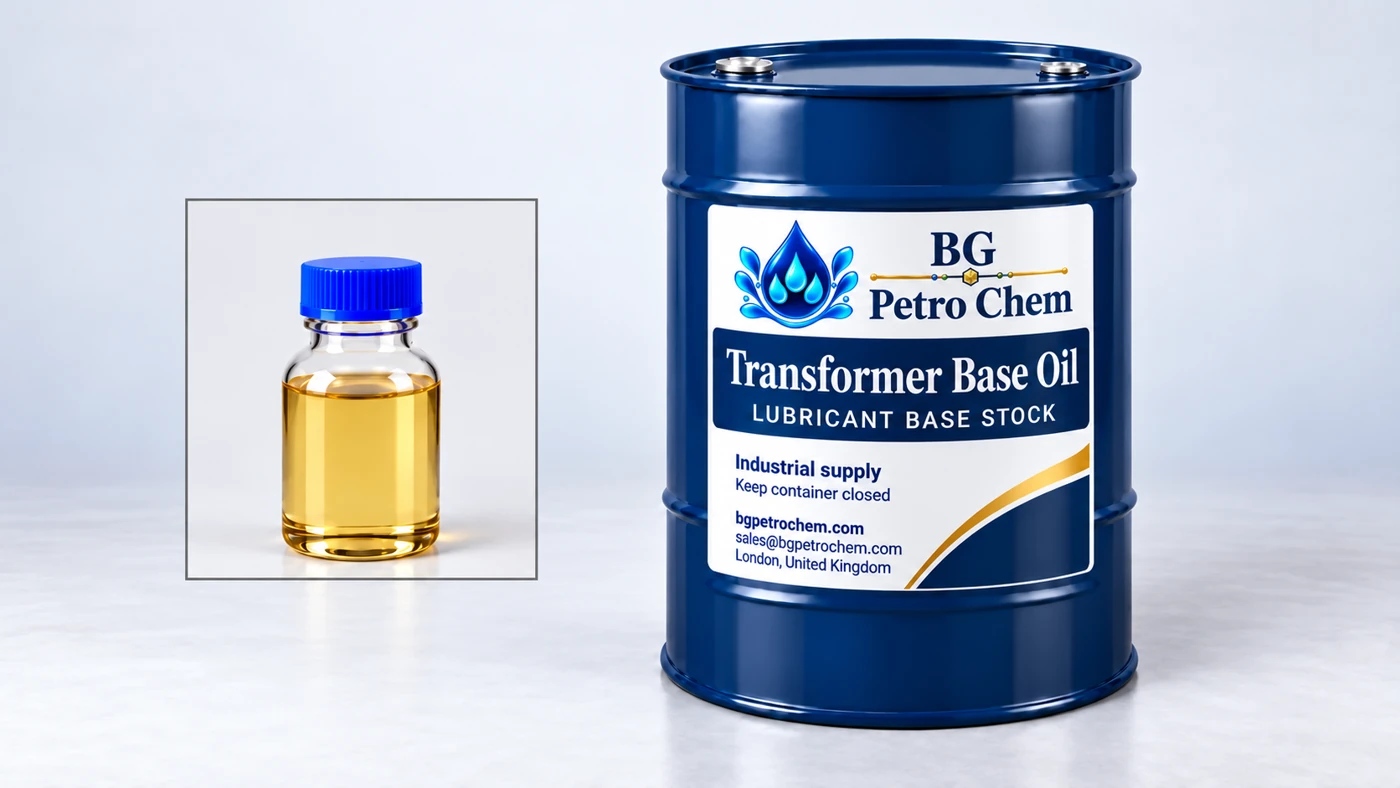
Transformer Base Oil
Feedstock for insulating oil blenders rather than a finished transformer oil. Transformer Base Oil is a light, thoroughly refined stock limited to max 10.0 cSt at 40 °C, with VI min 95 and pour point max -9 °C, for finishing into transformer, switchgear and circuit breaker oils.
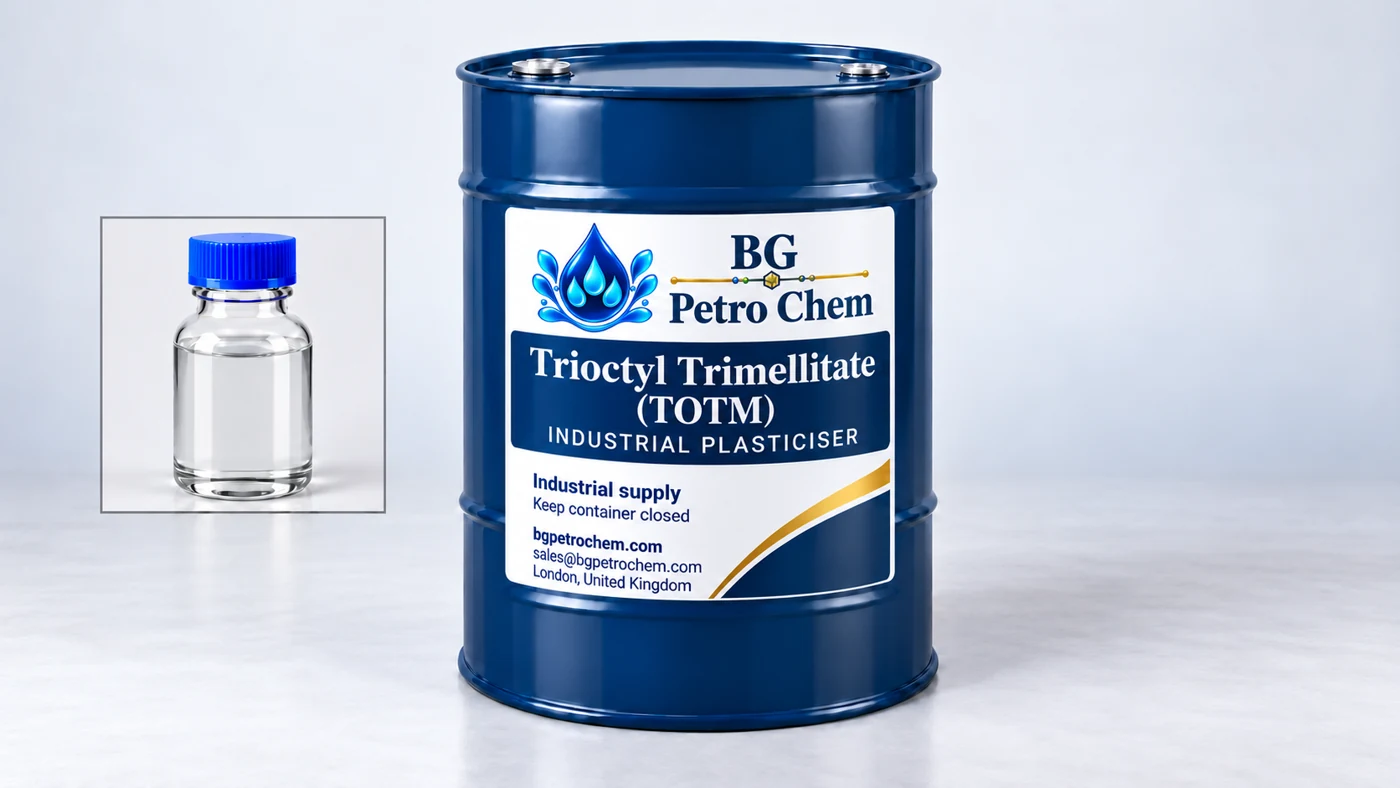
Trioctyl Trimellitate (TOTM)
Trioctyl trimellitate (TOTM, CAS 3319-31-1) is a low-volatility PVC plasticiser with three ester groups and a high molecular weight. It is used for cable rated to continuous service at 105 °C and 125 °C, for automotive wiring and for medical tubing.
Di(2-propylheptyl) Phthalate (DPHP)
DPHP (CAS 53306-54-0) is a high molecular weight phthalate made from a branched C10 alcohol, chosen for low volatility and migration and good electrical resistivity in PVC cable insulation. It sits outside the low molecular weight group that carries the reproductive-toxicity classification.
Diisononyl Phthalate (DINP)
Diisononyl phthalate (DINP, CAS 28553-12-0 / 68515-48-0) is a high molecular weight PVC plasticiser. Its longer branched chains make it less volatile and harder to extract than DEHP. It is limited to 0.1% in toys and childcare articles that children can mouth.
DOTP - Dioctyl Terephthalate
DOTP (dioctyl terephthalate, CAS 6422-86-2) is a general-purpose PVC plasticiser that is not an ortho-phthalate and is the main substitute for DEHP/DOP. It offers low volatility, good cold flexibility and good electrical properties for cable, film and flooring.
Polyvinyl Chloride Resin (Suspension Grade)
White suspension PVC powder (CAS 9002-86-2) in the Chinese SG grading, from SG1 (highest K value) to SG8 (lowest). SG5, the mid-range grade, covers most pipe, profile and rigid sheet. Produced by major manufacturers in China and packed in 25 kg bags or jumbo bags.
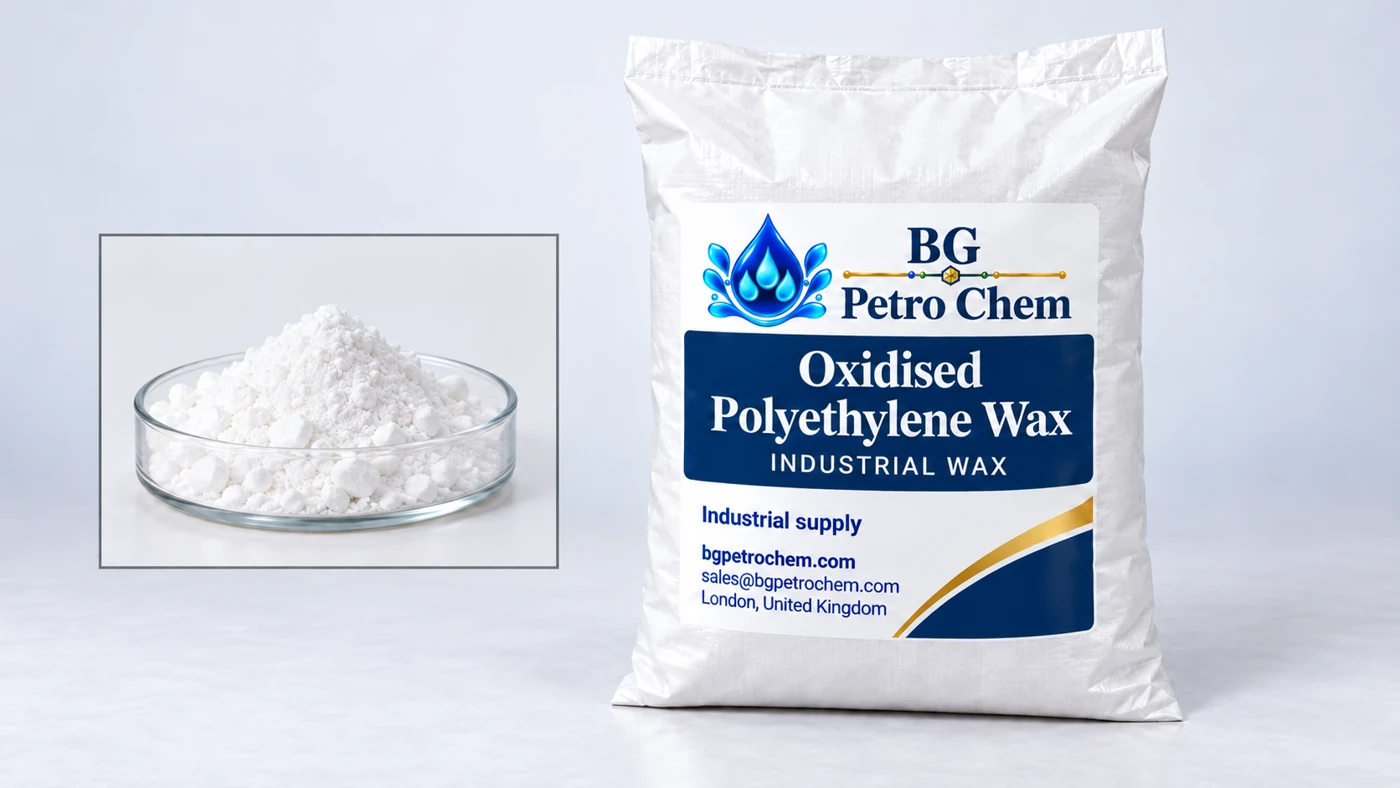
Oxidised Polyethylene Wax
Oxidised polyethylene wax is a low molecular weight HDPE wax given carboxyl and hydroxyl groups by controlled air oxidation. That polarity lets it wet pigments and disperse fillers while it lubricates, which plain PE wax cannot do.
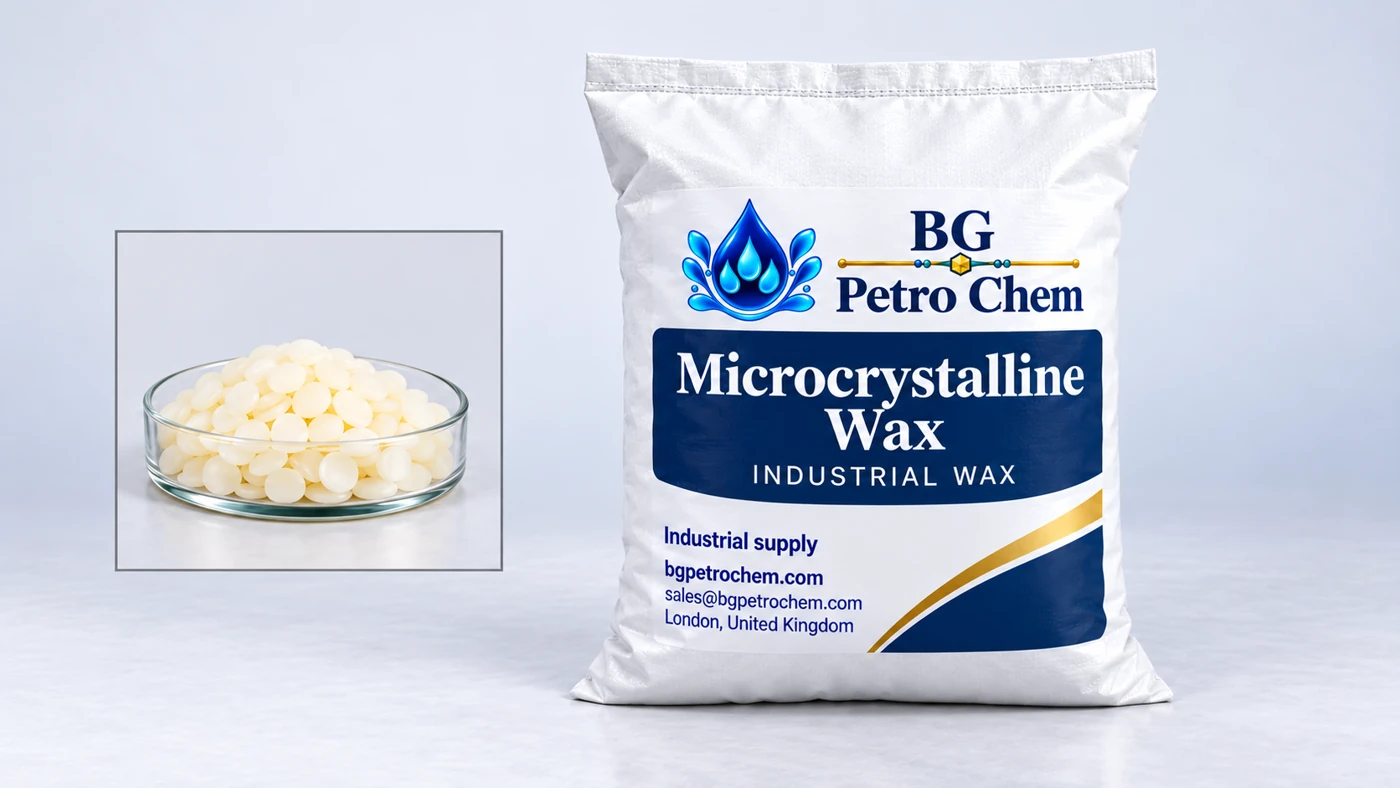
Microcrystalline Wax
Built from branched isoparaffins and cyclic naphthenes, microcrystalline wax (CAS 63231-60-7) is a petroleum wax whose molecules pack poorly. Only very small crystals form, so it is flexible, tough and tacky and binds far more oil than brittle paraffin.
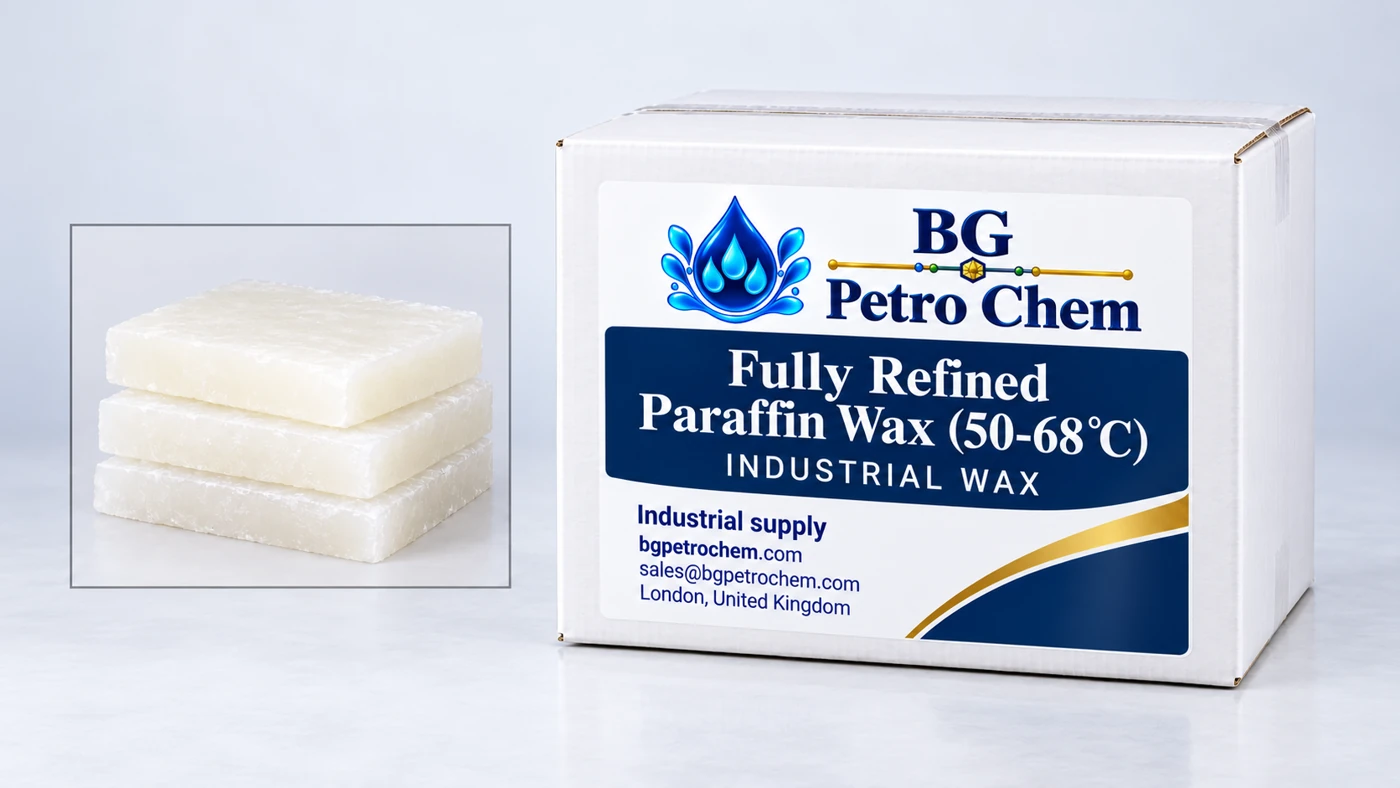
Fully Refined Paraffin Wax (50-68°C)
With deoiling and hydrotreating taking its oil content below 0.5%, fully refined paraffin wax (CAS 8002-74-2) is white, effectively odourless and refined to the standard food-contact and cosmetic uses call for. Melting grades run from 50 to 68 °C: lower points for container candles, higher for pillars and tapers.
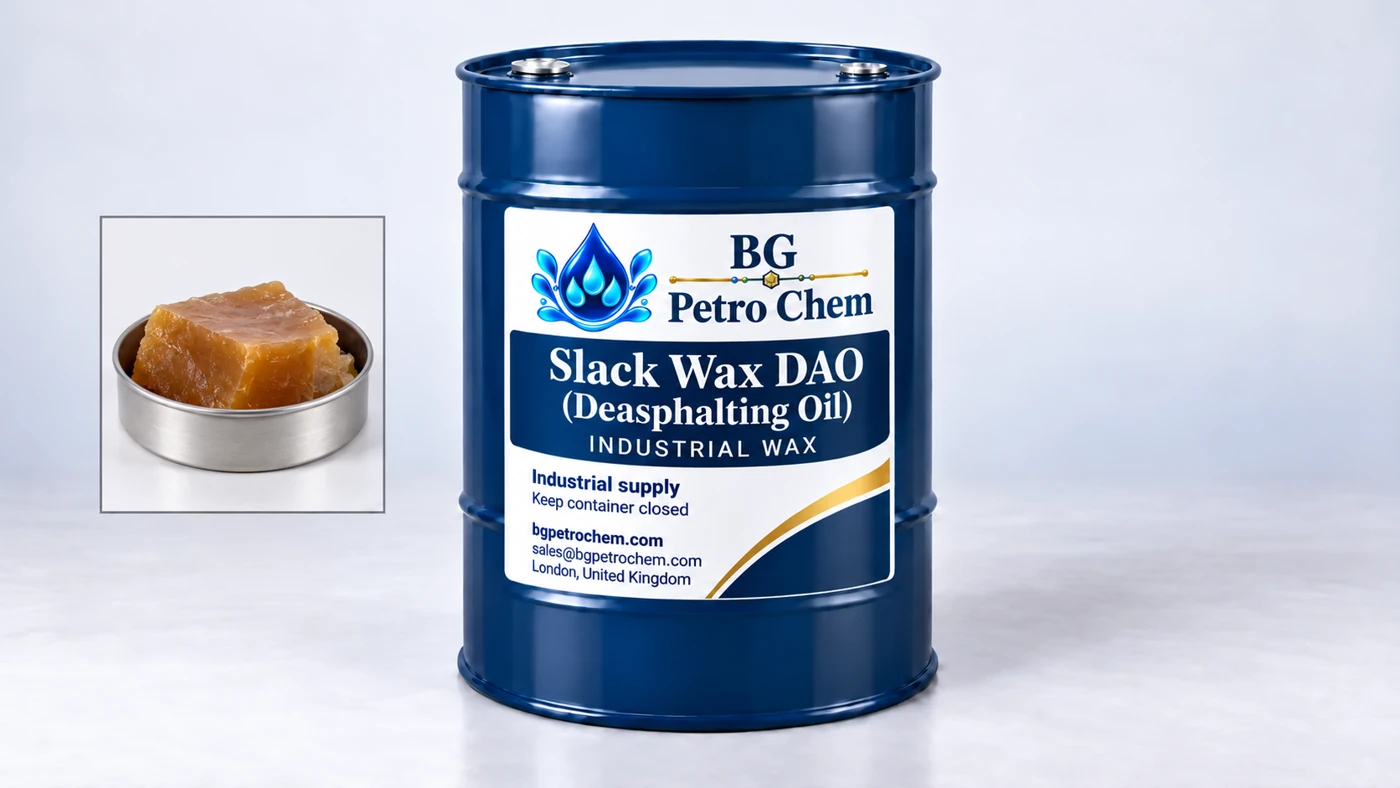
Slack Wax DAO (Deasphalting Oil)
Slack Wax DAO (CAS 64742-61-6) is the heaviest slack wax grade, crystallised from deasphalted oil. It melts at 69–74°C, the highest of the four, holds 5–20% oil, has a viscosity of 18.5–22.5 cSt at 100°C and feeds microcrystalline wax production.
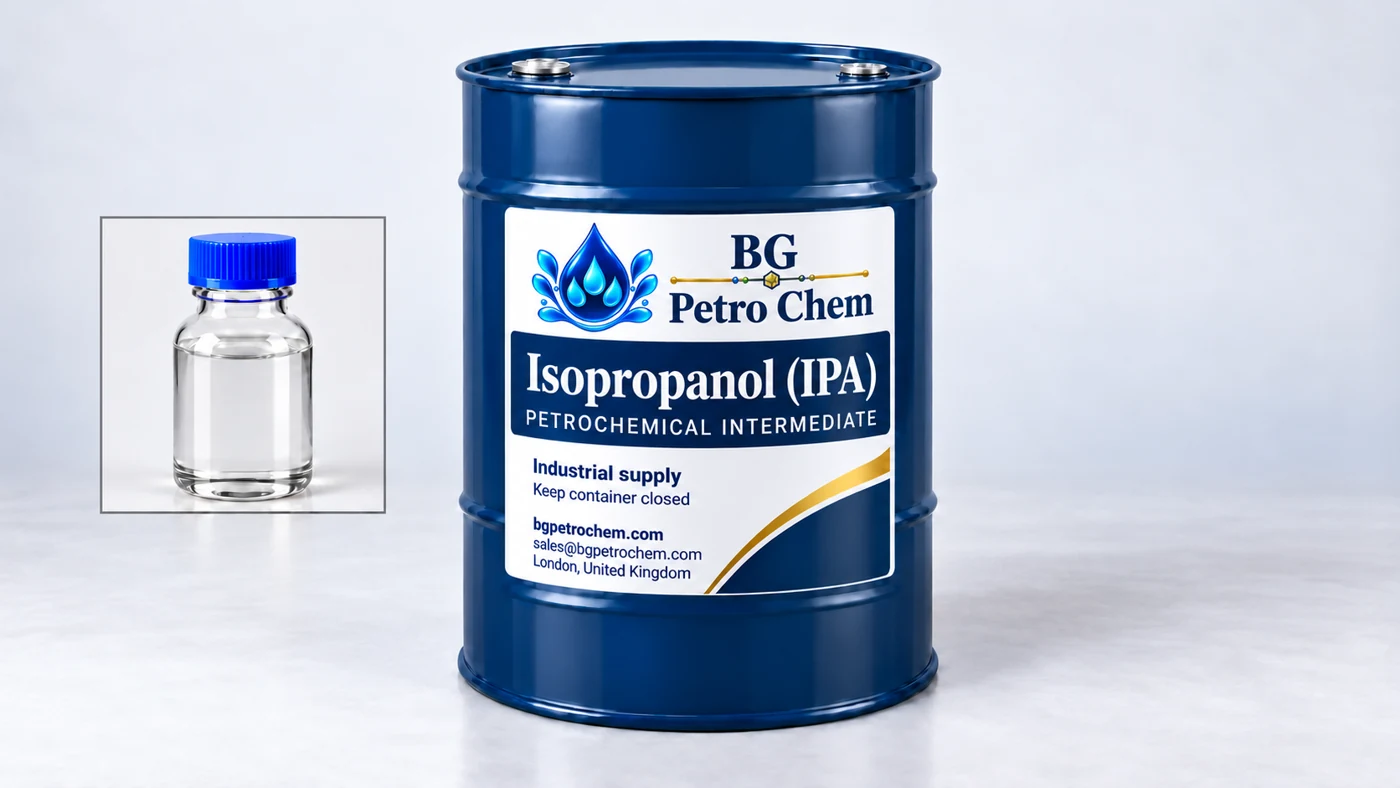
Isopropanol (IPA)
Isopropanol (IPA, CAS 67-63-0) at 99.9% minimum purity: a fast, clean-evaporating solvent for electronics and precision cleaning and for pharmaceutical, coating and ink processes, and the base that sanitiser makers dilute to about 70%. In 160 kg drums or ISO tanks.
Need a Custom Solution?
Contact our team to discuss your specific requirements for the Power & Electrical Insulation industry.