Road Construction, Roofing & Waterproofing
Asphalt plants, road builders and waterproofing makers use paving bitumen as their binder, with waxes, extract oil and sulphur as modifiers. The grade decides how a surface copes with traffic, summer heat and winter cold, so it is bought on test results rather than on its name.
Application requirements
Bitumen 60/70 is a penetration grade: a standard needle sinks 60 to 70 tenths of a millimetre into it at 25 °C, and its ring-and-ball softening point is 45 to 51 °C. It is the binder in hot-mix asphalt wearing, binder and base courses on highways, airfields and heavily trafficked roads, and the base bitumen for emulsions and polymer-modified binders. Fischer-Tropsch wax lowers the viscosity of bitumen above its melting point, which is why it is used to mix and compact asphalt at lower temperatures, and it stiffens the binder once the road has cooled. High extract oil fluxes and softens harder bitumen. Slack wax DAO is used in bitumen modification, damp-proofing and waterproofing membranes, slack wax MMO in construction waterproofing membranes, and the softer slack waxes LMO and SPO in water-repellent sizing for particleboard and MDF. Sulphur is also used as a bitumen modifier.
Specification checkpoints
Paving bitumen is specified by penetration at 25 °C (ASTM D5), softening point (ASTM D36), ductility at 25 °C (ASTM D113), flash point by Cleveland open cup (ASTM D92), loss on heating and retained penetration after heating (ASTM D6), which show resistance to hardening in the mixer, solubility in trichloroethylene (ASTM D2042) and specific gravity (ASTM D70). The 60/70 grade in this range is offered at flash point min 232 °C, ductility min 100 cm, loss on heating max 0.2% and retained penetration min 75%. Grade 60/70 belongs to the ASTM D946 series; European tenders usually name EN 12591 grades such as 50/70 or 70/100, so confirm which standard and test methods your contract uses. Waxes are specified by congealing or melting point, oil content and viscosity at 100 °C, extract oils by viscosity, flash point and aromatic content, and sulphur by purity, ash, moisture and acidity.
Grade selection
Highway and airfield wearing courses commonly use straight-run 60/70 bitumen, which is also the usual base for emulsion and polymer-modified bitumen plants. Where lower production temperatures are wanted, Fischer-Tropsch wax is dosed at a small percentage of the binder mass, with the dose set by laboratory trial. Membrane and damp-proofing producers draw on slack wax DAO and MMO, while panel-board mills use slack wax LMO or SPO, often supplied to them as wax emulsions.
Handling and documentation
Paving bitumen is handled hot, so the main risks are burns and fumes: keep storage and pumping temperatures within the producer's recommended range, because overheating increases fume and hardens the binder. Water or wet equipment in contact with hot bitumen can foam violently and overflow a tank. Hydrogen sulphide can collect in the headspace of bitumen and molten sulphur tanks, so treat tank entry and dipping as a confined-space task. Sulphur dust can form explosive clouds, and burning sulphur releases sulphur dioxide. Aromatic extract oils can carry a carcinogen classification depending on their polycyclic aromatic content, so read the safety data sheet before use. Request the specification, safety data sheet and recent test report for each grade before you fix a mix design.
Products for Road Construction, Roofing & Waterproofing
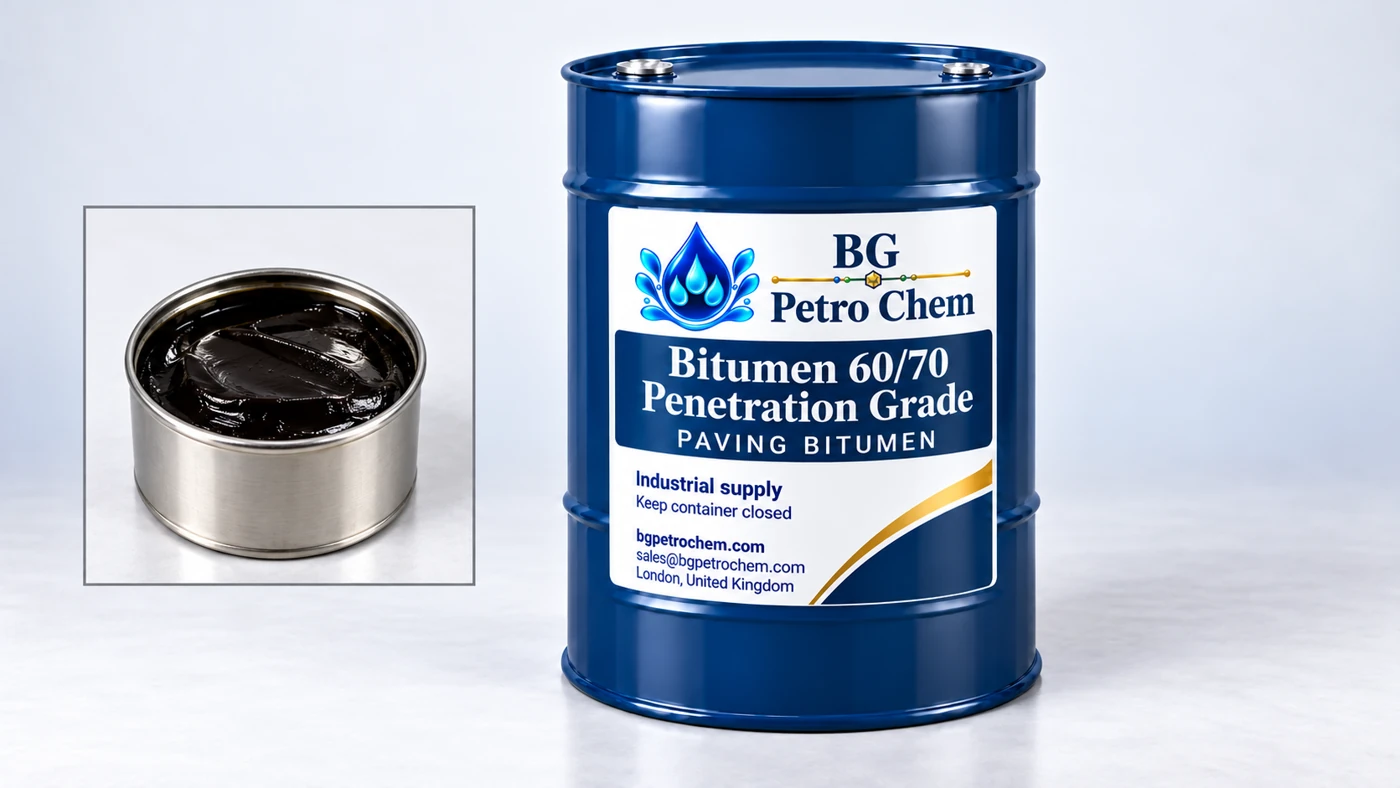
Bitumen 60/70 Penetration Grade
Paving bitumen of penetration grade 60/70, with penetration 60 – 70 (0.1 mm) at 25 °C and softening point 45 – 51 °C, supplied as the asphalt binder for highways, airfield pavements and heavily trafficked roads and as base bitumen for emulsions and modified binders.
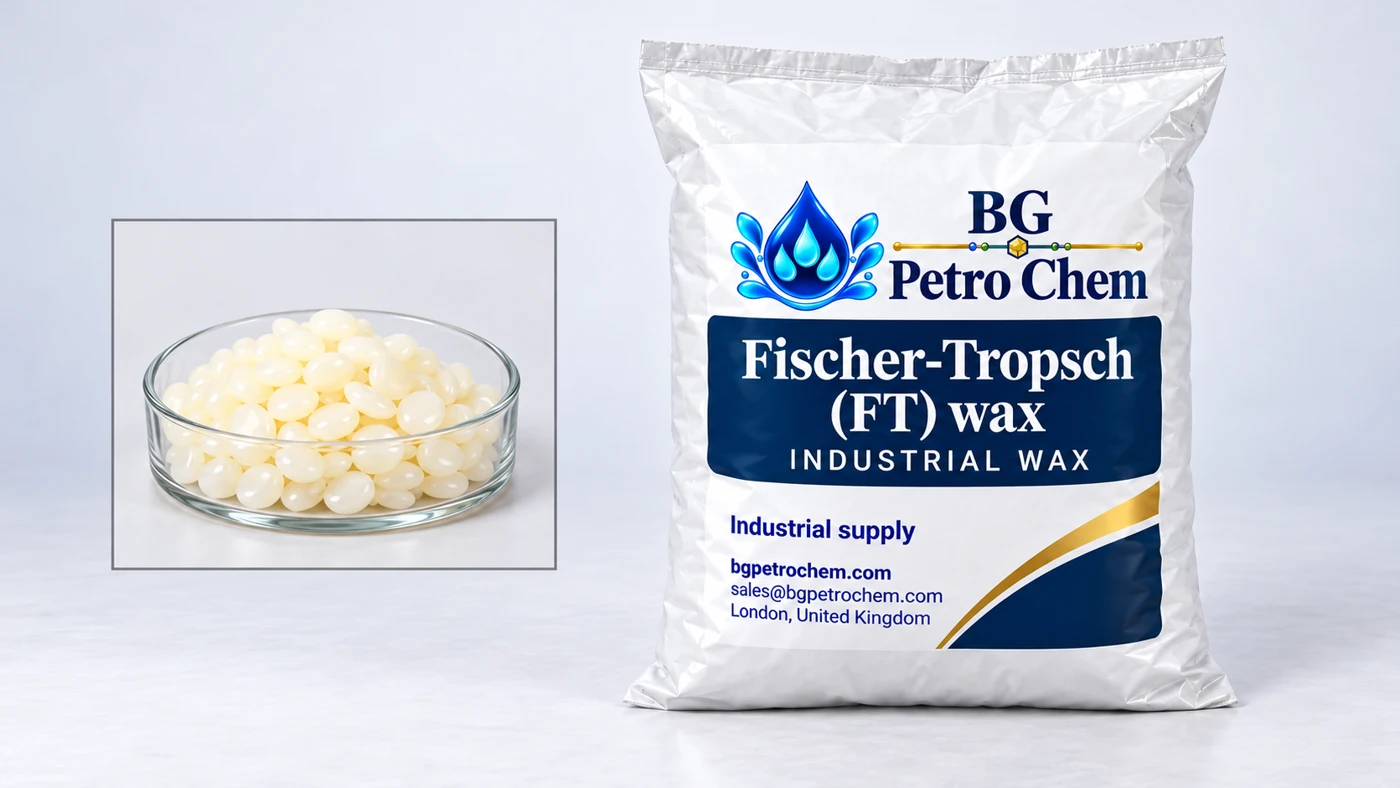
Fischer-Tropsch (FT) wax
FT wax is a high-purity synthetic paraffin made from syngas, with a narrow carbon-chain spread, very low oil content, a high melting point and low melt viscosity. It adds hardness and lubrication to PVC, hot melts, inks, coatings and bitumen.
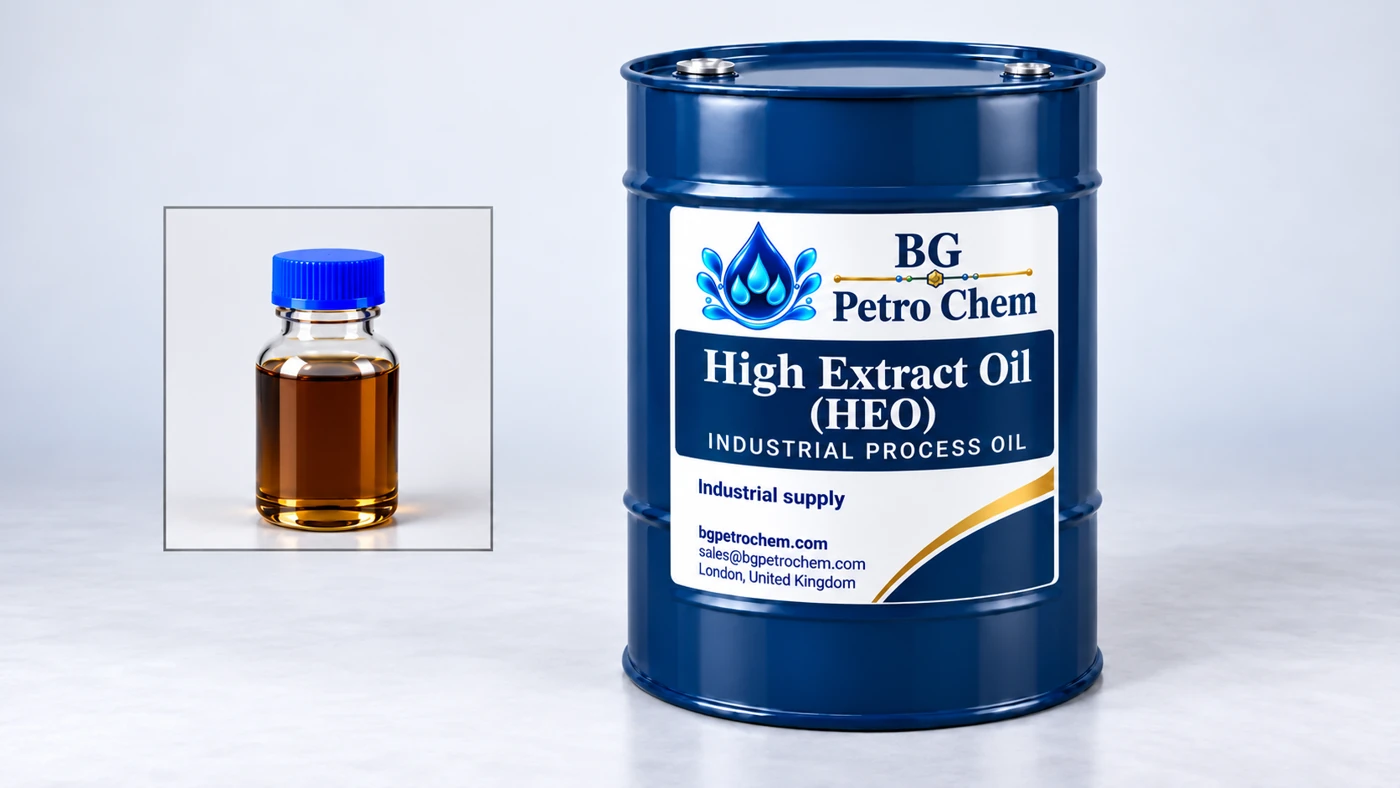
High Extract Oil (HEO)
Heavy aromatic extract for extending SBR and natural rubber, reclaiming scrap tyre rubber, tyre compounding and fluxing hard bitumen. High Extract Oil (HEO) is recovered when heavier lube distillates are solvent refined and is specified at min 12.0 cSt at 100 °C, with sulphur max 5.6 wt %.
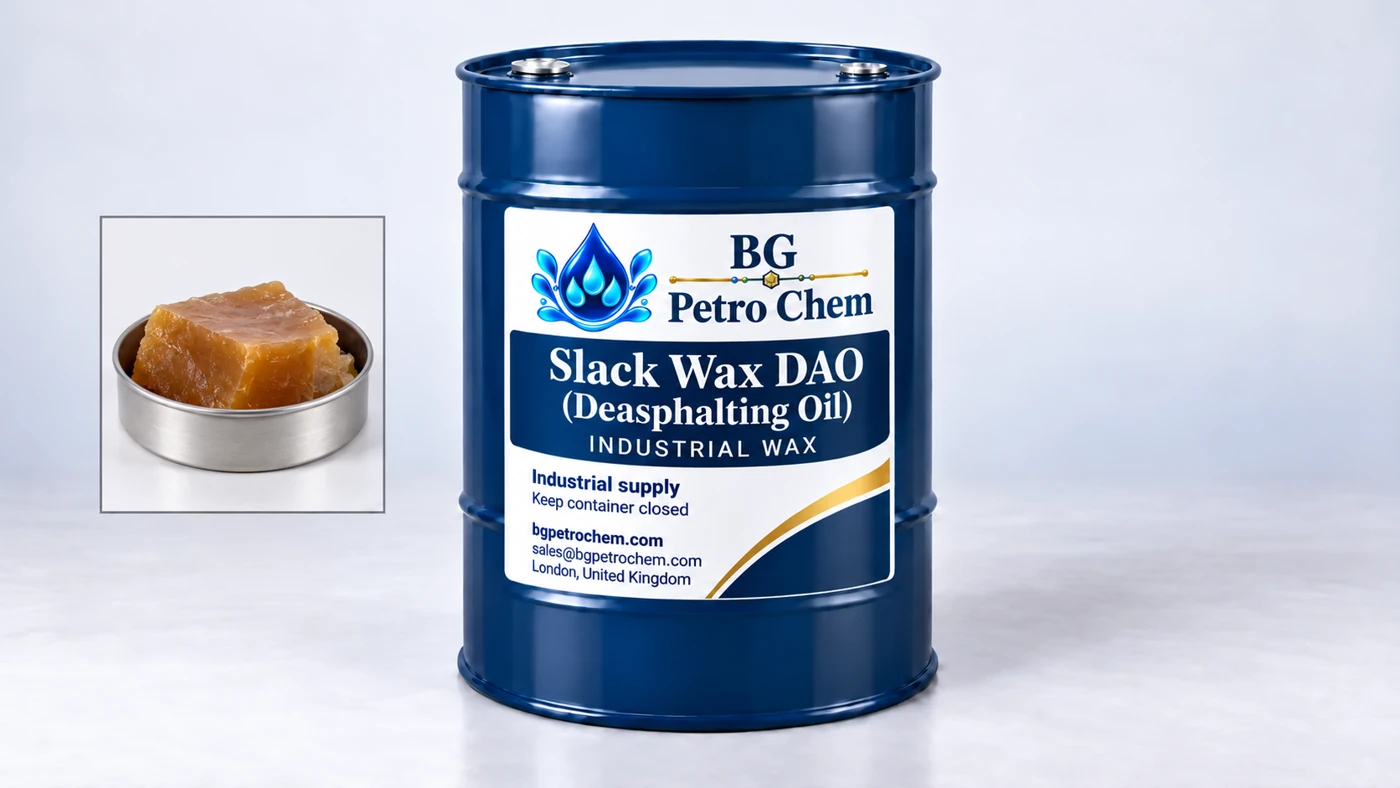
Slack Wax DAO (Deasphalting Oil)
Slack Wax DAO (CAS 64742-61-6) is the heaviest slack wax grade, crystallised from deasphalted oil. It melts at 69–74°C, the highest of the four, holds 5–20% oil, has a viscosity of 18.5–22.5 cSt at 100°C and feeds microcrystalline wax production.
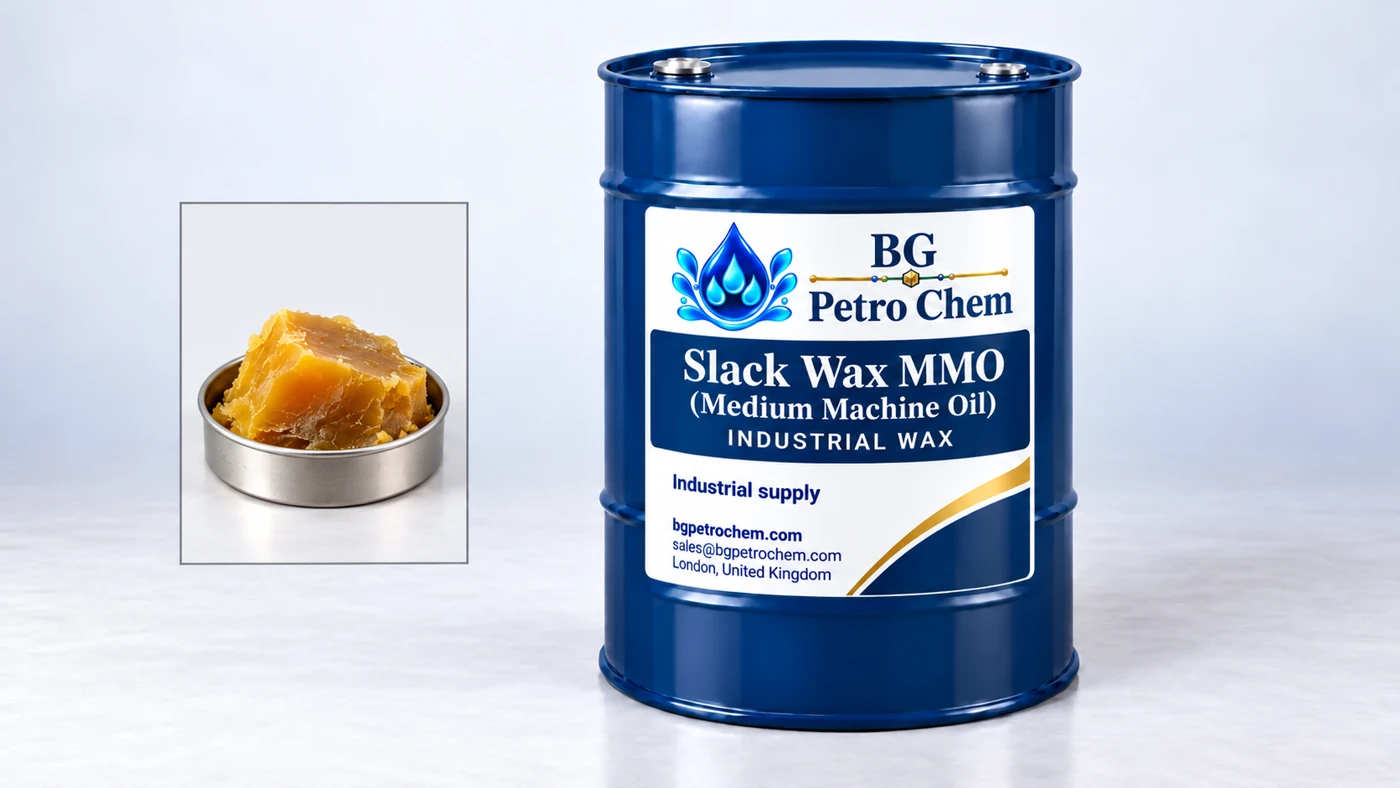
Slack Wax MMO (Medium Machine Oil)
Slack Wax MMO (CAS 64742-61-6) is taken from the medium machine oil distillate. With a 58–64°C melting point, 5–15% oil and 8.3–9.4 cSt at 100°C, it is firmer than LMO and SPO and suits uses that need a heavier wax feedstock.
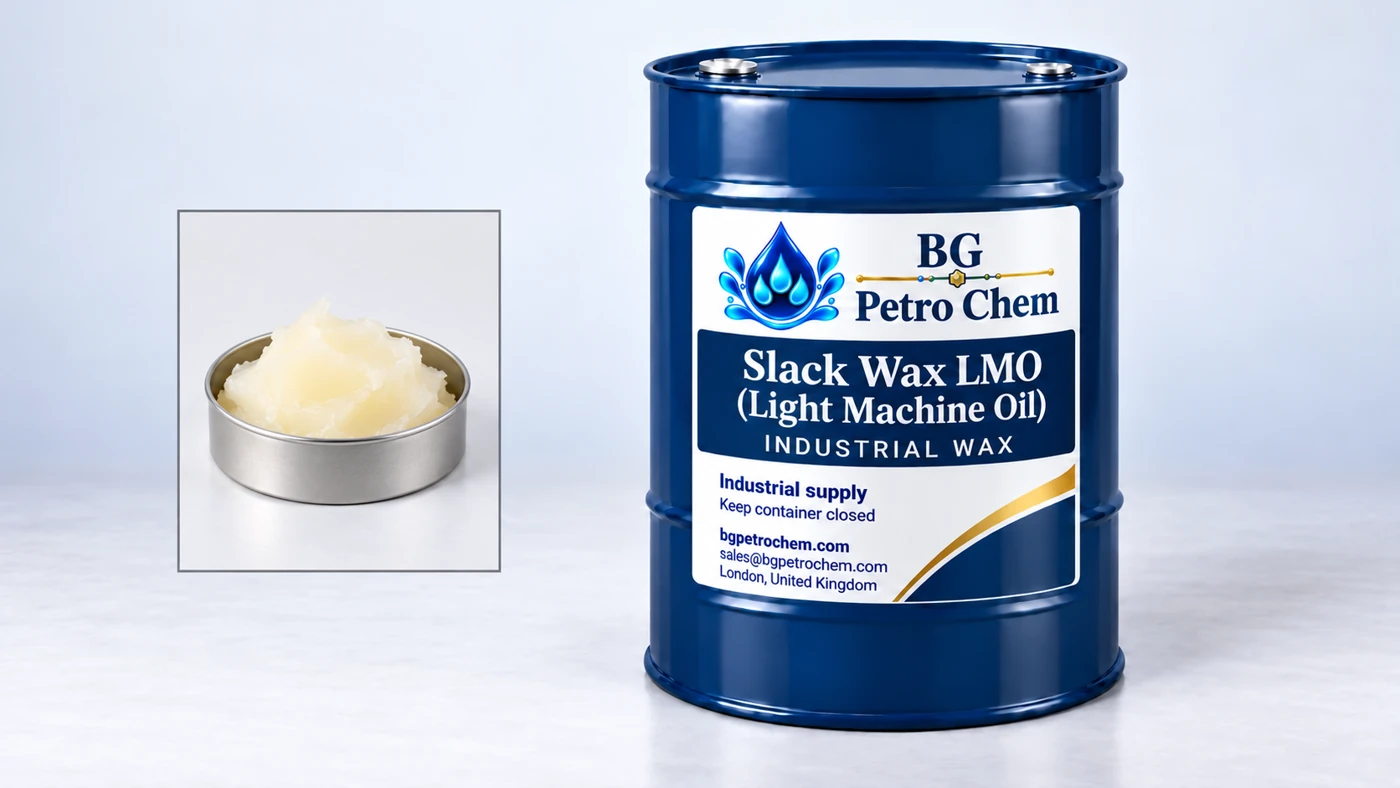
Slack Wax LMO (Light Machine Oil)
Slack Wax LMO (CAS 64742-61-6) is the light machine oil cut of the slack wax series. Melting at 47–53°C with 10–25% oil and 3.1–4.2 cSt at 100°C, it is the softest and most fluid of the four grades.
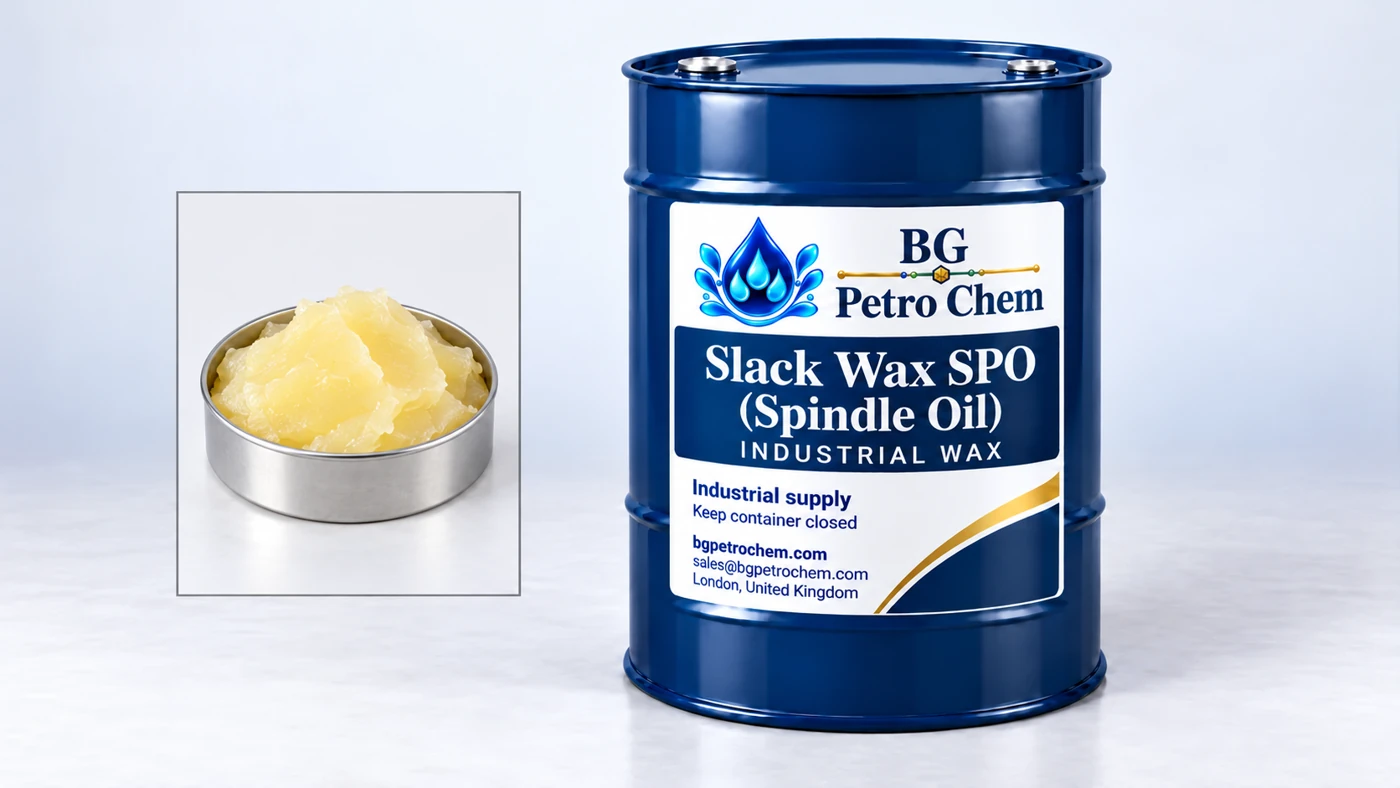
Slack Wax SPO (Spindle Oil)
Taken unrefined from the spindle oil distillate, Slack Wax SPO (CAS 64742-61-6) melts at 53–58°C, holds 5–20% oil and has a viscosity of 4.7–5.7 cSt at 100°C. At ASTM colour 1.5 max it is the second palest of the four grades, after LMO.
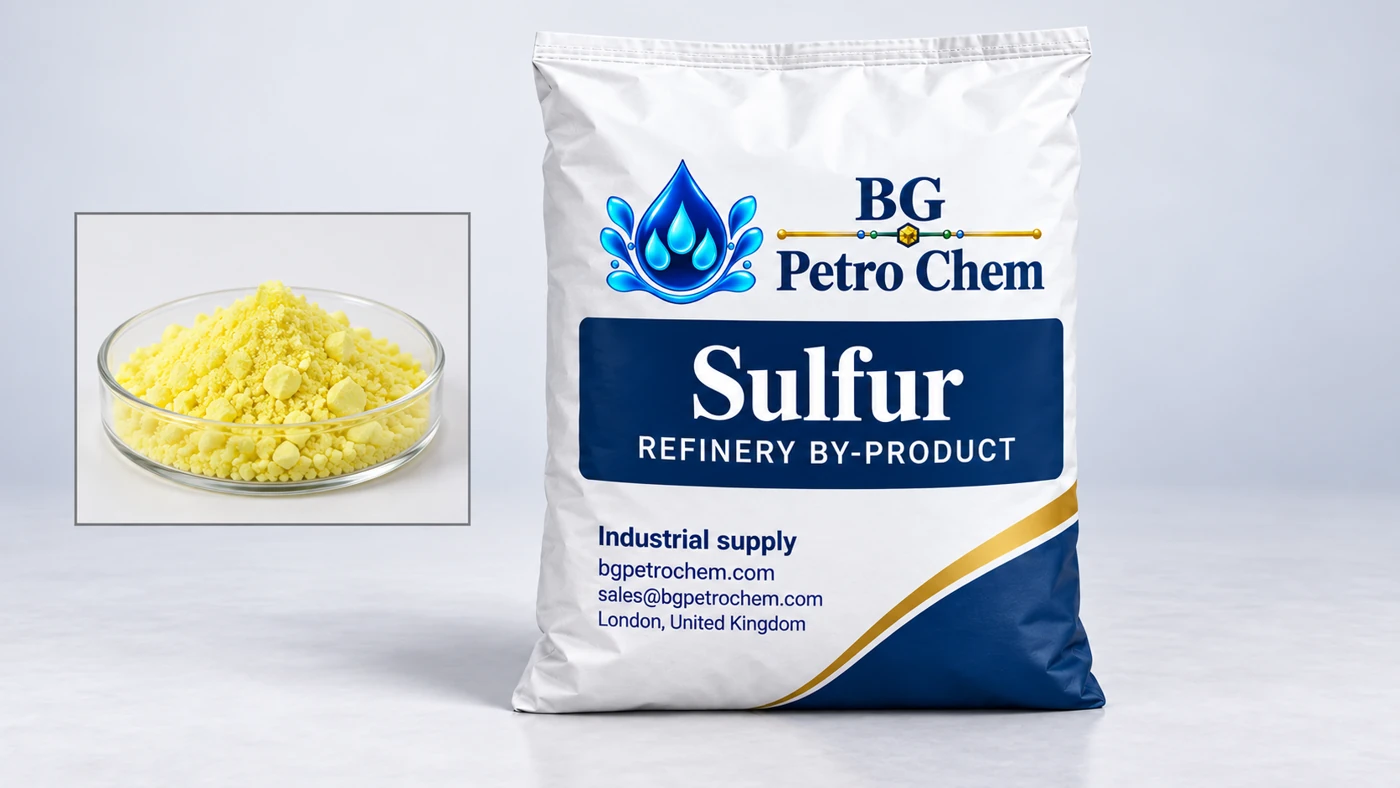
Sulfur
Sulphur (CAS 7704-34-9) recovered at refinery HDS and Claus units in Pakistan, as bright yellow granules or lumps with a minimum purity of 99.8 wt%. Uses include sulphuric acid, rubber vulcanisation, fertilisers and bitumen modification.
Need a Custom Solution?
Contact our team to discuss your specific requirements for the Road Construction, Roofing & Waterproofing industry.